Kitchen Decorating Ideas That Transform Your Space: Expert Tips for 2026
Kitchen decorating doesn’t require a full renovation to make a real impact. Whether you’re refreshing cabinets, updating fixtures, or simply rearranging what you have, thoughtful decorating choices can turn a purely functional space into one that feels intentional and welcoming. This guide walks through practical kitchen decor ideas, from defining your style to selecting hardware, lighting, and finishing touches, so you can create a kitchen that both works hard and looks good doing it.
Key Takeaways
- Define your kitchen’s style and color palette first—choose one or two dominant colors and layer in accent colors through hardware and backsplash to create visual cohesion without requiring a full renovation.
- Cabinet hardware is one of the most impactful kitchen decorating updates, costing just $3–$15 per piece and instantly setting the tone with options like sleek bar pulls for modern or cup pulls for traditional styles.
- Layer your kitchen lighting with overhead fixtures for general illumination, under-cabinet LED strips for task lighting, and pendant lights to add both function and ambiance while using warm white bulbs (2700K) for an inviting feel.
- Backsplashes and accent walls are prime kitchen decorating opportunities—consider textured tiles, subway tile, or a bold color on one wall to add personality while keeping the overall design intentional and cohesive.
- Style open shelving and counters with 40% functional items and 60% white space, displaying beautiful dishware and cookbooks while storing daily-use items accessibly and keeping small appliances out of sight.
- Small kitchen decorating updates like new hardware, fresh paint, or strategic rearrangement deliver measurable impact and can transform a purely functional space into one that feels welcoming and designed.
Define Your Kitchen’s Style and Color Palette
Before you buy a single fixture or paint sample, decide what aesthetic you’re after. Kitchen decorating styles range from clean minimalist to warm farmhouse, industrial to mid-century modern. Spend a week noticing which kitchens stop you scrolling, are they sleek and monochromatic, or layered with warm wood tones and vintage touches?
Your color palette anchors everything that follows. Start with one or two dominant colors for cabinetry and walls, then layer in a secondary accent color through hardware, backsplash tile, or bar stools. Neutral bases (white, gray, soft greige) give you flexibility later, while bolder choices like navy or forest green create immediate personality. Consider how natural light hits your space at different times: a color that looks stunning at noon might feel muddy at 6 p.m. Pull actual paint chips and tape them to your walls for a few days before committing.
If you’re drawn to interior decorating styles beyond the kitchen, mid-century modern, scandinavian, industrial, carry those principles through intentionally. Consistency across your home feels more polished than random eclecticism. Your kitchen doesn’t have to match your living room exactly, but repeating materials (wood finishes, metal tones, tile patterns) creates visual cohesion that makes the whole space feel designed rather than accumulated.
Choose Hardware, Fixtures, and Lighting That Matter
Cabinet Hardware and Appliance Finishes
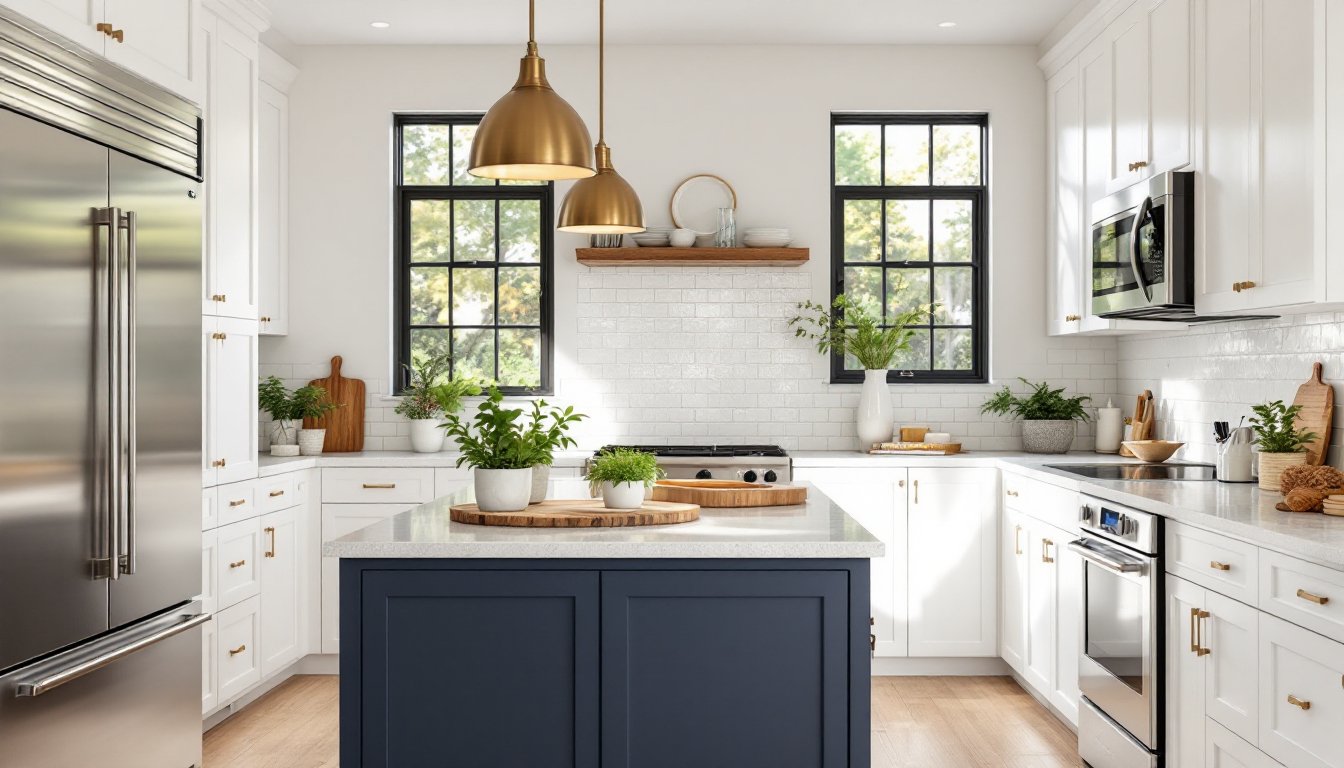
Cabinet hardware is one of the easiest kitchen decorating updates with outsized visual impact. Pulls and knobs set the tone instantly, sleek bar pulls read modern, cup pulls feel traditional, and ring pulls suggest mid-century character. A 3-inch or 4-inch pull on drawers and cabinet doors costs $3–$15 per piece and takes seconds to install with just a drill.
Match your hardware to your appliance finish strategy. Stainless steel appliances pair naturally with brushed nickel or chrome hardware: black stainless works with matte black or oil-rubbed bronze: and paneled refrigerators (where cabinet fronts cover the appliance) let you choose freely. Don’t feel pressured to buy all new appliances for consistency, mixing finishes intentionally (one stainless element, one black element) reads modern if you’re deliberate about it.
Lighting for Function and Ambiance
Kitchen lighting serves two jobs: task and mood. Overhead recessed lights or a central fixture handle general illumination, but that alone feels harsh and flat. Layer in under-cabinet LED strips for task lighting at counters and prep zones (they also highlight backsplashes beautifully). A pendant light or two over a kitchen island or sink adds visual interest and pools light where you actually work.
Warm white bulbs (2700K color temperature) feel inviting, while cool white (4000K+) works better for detailed work like reading recipes. Many kitchens benefit from dimmable fixtures so you can adjust the mood from bright task-mode to softer ambient light during dinner. Pendant fixtures run $50–$300 depending on material and brand: LED under-cabinet strips cost $20–$60 for a 10-foot run and plug into standard outlets.
Add Personality With Backsplashes, Walls, and Decor
Your backsplash is prime real estate for kitchen decorating impact. Subway tile is timeless and forgiving, but consider textured tiles, 3×6 brick-laid layouts, or hexagon patterns to add visual rhythm. Cement tiles bring color and geometry: glass tiles reflect light: and natural stone (marble, slate) adds warmth. Budget $15–$30 per square foot installed, or DIY with adhesive and grout if your wall prep is solid (smooth drywall, no gaps).
Walls deserve attention too. Paint is the quickest refresh, consider a soft accent color on one wall, or keep walls neutral and use removable wallpaper in a small zone (behind open shelving, for example) to test a pattern before committing. A kitchen island or lower cabinet base in a different color creates subtle contrast: forest green or navy bases with white uppers read sophisticated without being risky.
Decor layers matter more than you’d think. Open shelving showcases bowls, glasses, and cookbooks (kitchen decor ideas thrive on visible storage). A few well-chosen pieces, a wooden cutting board leaning against the backsplash, a small potted herb on the counter, a vintage kitchen scale, tell a story about how you actually live. Avoid clutter, but don’t aim for showroom sterility either. Your kitchen should look like it belongs to someone.
When decorating a guest room or dining nook adjacent to your kitchen, let your kitchen’s color palette and material choices inform those spaces. Repeating a tile pattern, hardware finish, or accent color creates flow that makes your home feel intentional and larger.
Style Your Counters and Open Shelving
Countertops set the practical and visual foundation. Laminate is durable and budget-friendly ($1,500–$3,000 installed for an average kitchen): butcher block brings warmth but requires maintenance: quartz offers durability with minimal upkeep: and natural stone (granite, marble) adds luxury but demands sealing. Your choice shapes every kitchen decorating decision that follows, warm wood tones call for brass or warm bronze hardware, while cool quartz pairs naturally with chrome or brushed nickel.
How you style the counter itself matters as much as what it’s made of. Keep daily-use items accessible: a utensil holder, a knife block, a bowl of fruit. Clear the visual clutter by storing small appliances in closed cabinets, not lined up on the counter. One or two decorative pieces, a ceramic pitcher, a wooden spoon holder, add personality without chaos.
Open shelving is a common kitchen decorating feature that either shines or overwhelms based on styling. Stack plates and bowls with one or two facing forward (shows the pattern), layer glasses behind bowls for depth, and tuck a cookbook or two in horizontally. A small plant or two softens the arrangement. If your open shelving feels cluttered, you’ve overloaded it, aim for 40% functional items and 60% white space. The goal is intentional, not packed.
Consider linking kitchen decorating choices to nearby spaces. If your kitchen opens to a dining area or home design inspiration resources, let your kitchen’s materials and finishes inform that transition. A cohesive palette, the same wood species for shelving and dining table legs, or matching tile in the kitchen and entryway, amplifies the sense of an intentionally designed home.
Conclusion
Kitchen decorating is less about trendy must-haves and more about honest choices that reflect how you live. Start with your style preference and color palette, layer in functional hardware and lighting, then add personality through backsplash, walls, and thoughtful styling. Small updates, new pulls, fresh paint, or a rearranged counter, deliver measurable impact without requiring contractor involvement. The result is a kitchen that works beautifully and looks like it belongs to someone real.