Living Room Furnishing Ideas That Transform Your Space in 2026
A thoughtfully furnished living room doesn’t happen by accident, it starts with understanding how you actually use the space. Whether you’re working with a tight apartment or an open-concept home, the right furnishing approach combines smart layout decisions with purposeful pieces that serve both form and function. Living room furnishing ideas work best when they respect your room’s dimensions, your household’s daily rhythms, and your budget. This guide walks you through the practical steps to turn any living area into a space that looks intentional and works effortlessly.
Key Takeaways
- Start living room furnishing ideas with a functional layout that respects traffic flow and creates distinct zones using furniture groupings and rugs.
- Choose one or two statement seating pieces scaled to your room’s dimensions, then keep secondary seating neutral to avoid visual chaos.
- Layer your lighting with ambient, task, and accent sources—warm bulbs and dimmers create ambiance without requiring permanent wiring.
- Incorporate multi-functional storage like ottomans, media consoles, and shelving to keep surfaces clear while maximizing usable space.
- Use rugs, repeated textures, and focal points like feature walls or fireplaces to create visual cohesion and anchor your seating zones.
- Refresh your living area decor affordably by rearranging furniture, swapping textiles, and testing dimensions with painter’s tape before making expensive purchases.
Start With a Functional Layout
Before you buy a single piece of furniture, nail down how the room flows. Begin by identifying zones: seating clusters, media viewing areas, reading nooks, or work-from-home corners. In open-concept spaces, rugs and furniture groupings act as invisible walls, signaling where one zone ends and another begins.
Traffic flow is non-negotiable. Aim for at least 36 inches of clear walkway between furniture arrangements so people can move through the room without squeezing past a coffee table. Between your sofa and coffee table, target roughly 16–18 inches, close enough for comfort, far enough to avoid stubbed toes and awkward leg angles.
Room size determines layout strategy. In large living rooms, don’t shy away from creating multiple seating areas. Two couches positioned back-to-back or a sofa paired with a set of swivel chairs can split the space effectively and maximize seating without feeling cramped. In smaller rooms, avoid the temptation to push everything against the walls. Floating your sofa slightly into the room and mixing compact, multi-functional pieces creates better proportions and makes the space feel larger, not smaller. A console table behind a floated sofa serves both aesthetic and storage purposes.
Choose Statement Seating That Works for Your Space
Seating sets the tone for your living room. Scale matters: oversized sectionals can anchor a spacious room, but they’ll swallow a modest living area whole. Measure your doorways, stairwells, and entryways first, sometimes the largest piece that looks perfect in a showroom won’t actually fit through your front door.
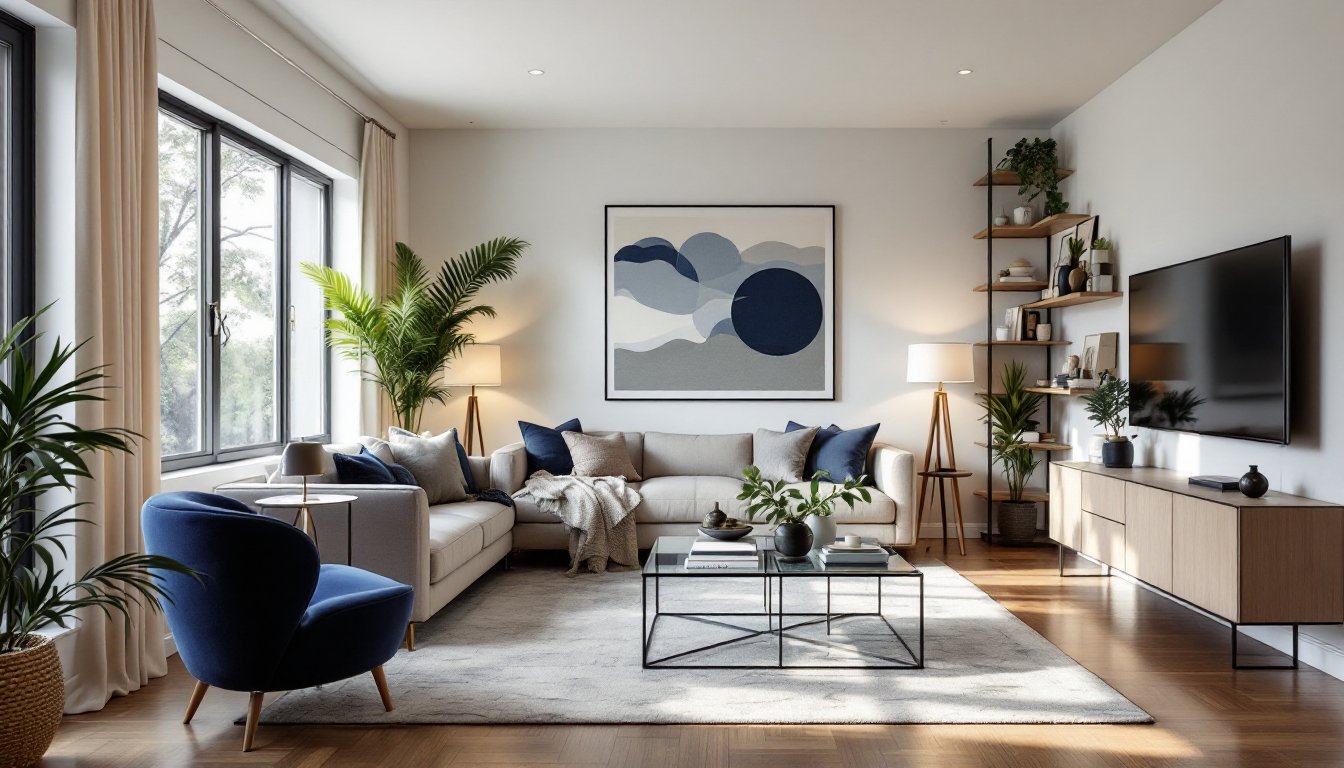
Commit to one or two statement seating pieces. This might be a sofa in a bold jewel tone, a sculptural accent chair, or a curved loveseat that becomes the focal point. Keep secondary seating simpler, neutral tones and straightforward silhouettes. This approach prevents visual chaos and lets your standout pieces breathe.
In open-plan homes, swivel chairs and chairs with casters offer flexibility. Residents can rotate seating to face different zones, toward the media setup during movie night, toward the windows for conversation during the day. It’s a small feature that dramatically increases usability without requiring structural changes.
Add Layers of Lighting for Ambiance and Practicality
Lighting transforms how a living room functions and feels. Don’t rely on a single overhead fixture. Instead, combine three lighting layers: ambient (general room illumination from ceiling or plug-in fixtures), task (focused light for reading or assignments), and accent (decorative sconces or picture lights that add depth).
Many older homes and rental apartments lack overhead wiring, which isn’t a barrier. Floor lamps with tripod bases, table lamps flanking a sofa, and plug-in sconces mounted on the wall create layered light without permanent wiring. Position task lighting near seating areas where people actually read or work. Distribute ambient light across different zones so each feels independently usable.
Warm bulbs (2700K color temperature) suit living rooms better than harsh daylight options. Dimmers give you control, bright for cleaning, softer for evening conversation. Test layouts before committing: a single lamp might cast harsh shadows, but two lamps flanking a sofa eliminate dark corners. The difference is immediate and dramatic.
Incorporate Storage and Coffee Tables With Purpose
Living room clutter creeps up fast: remotes, magazines, kids’ toys, throws, electronics. Smart storage keeps surfaces clear without making the room feel like a storage unit.
Mix closed storage (armoires, cabinets, sideboards) to hide day-to-day items with open shelving for intentional display. A media console handles electronics and gaming gear. Storage ottomans double as footrests and hidden catch-alls. Tall narrow shelves fit snugly beside a sofa and provide display space without eating floor area.
Coffee tables anchor the seating arrangement and should be scaled to the sofa. A table roughly one-third the sofa’s length looks proportional. Ensure legroom on all sides, cramped coffee tables create foot-traffic bottlenecks. Round or curved tables feel less imposing in smaller rooms, while rectangular tables work well in organized seating clusters. Consider materials: glass tops feel lighter in tight quarters, while wood or stone grounds larger rooms.
Balance Color, Texture, and Accent Pieces
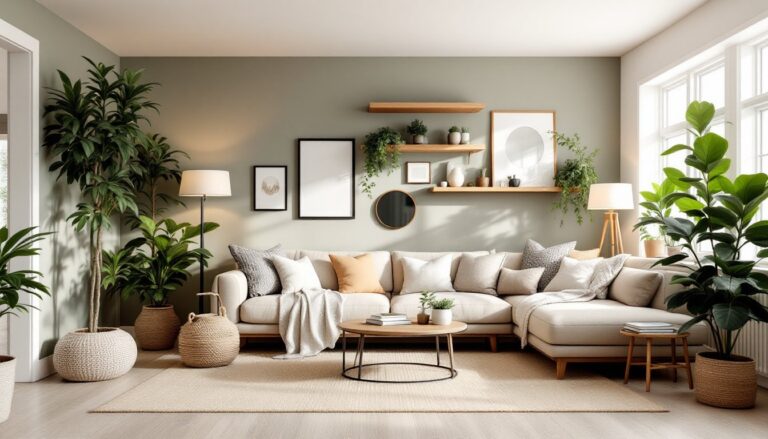
In open-concept homes, a cohesive color palette ties zones together. Often one wall color carries throughout, preventing visual fragmentation. Within that framework, introduce texture and secondary colors through soft furnishings.
Repeat key materials at least twice in each seating area. If your sofa is upholstered in linen, echo that nubby texture in pillows or a throw. If you’re using metal accents, lamp bases, side table frames, repeat that metal tone elsewhere. Wood, stone, leather, and fabric all need repetition to feel intentional rather than random.
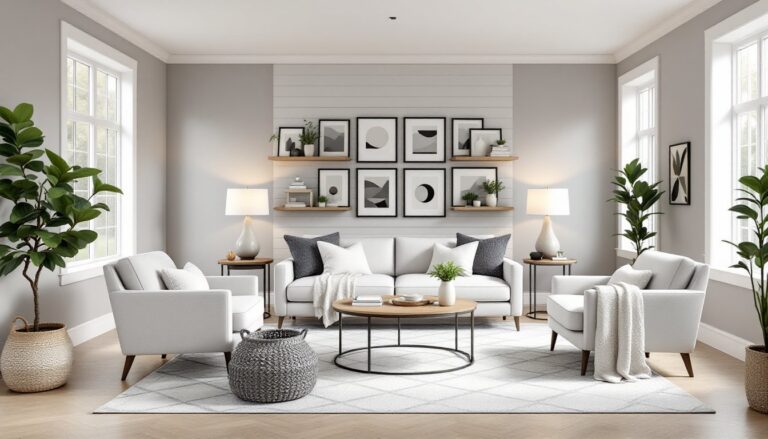
Area rugs anchor seating zones and define living area decor boundaries. A rug sized to fit the front legs of all seating pieces (or most pieces in an asymmetrical arrangement) creates visual coherence. Accent pieces, throw pillows, wall art, a gallery wall, guide the eye and prevent monotony. A feature wall with paint, wallpaper, or shiplap behind the sofa serves the same anchoring function. Fireplaces become natural focal points: arrange seating to face them even if you rarely use the fire.
Refresh Without Breaking the Budget
Transformation doesn’t require wholesale replacement. Start by photographing your current layout from multiple angles, then rearrange furniture into several different configurations. Study the photos side-by-side: you’ll often see that a simple shift, moving the sofa perpendicular to its current position or angling chairs toward a window, opens up the room.
Swap or add textiles and smaller pieces for major visual impact at minimal cost. New throw pillows, a layered rug, and a statement floor lamp cost a fraction of a new sofa but completely reset the living area decor. Artwork, plants, and lighting adjustments shift ambiance without renovation.
Before committing to expensive furniture, test dimensions. Create full-scale templates using painter’s tape or cardboard cutouts. Tape an outline of your potential sofa on the floor: sit in a chair for 10 minutes to assess sightlines. You can also reference design inspiration from resources like home design ideas for modern living or interior design solutions for smaller spaces to visualize arrangements. This $5 experiment prevents the $2,000 mistake.
Conclusion
A thoughtful living room balance starts with function: a layout that moves smoothly, seating scaled to your room, lighting that adapts to your needs, and storage that keeps surfaces clear. Layer in color, texture, and focal points that reflect your taste, then refine through small swaps and rearrangement. You don’t need a designer’s budget to create a furnished living room that works hard and looks intentional.