Cozy Cottage Interior Design: Create A Warm, Inviting Home In 2026
The appeal of cottage-style living lies in its timeless ability to make a home feel like a retreat, warm, lived-in, and genuinely inviting. Cozy cottage interior design isn’t about expensive finishes or trendy statement pieces: it’s about layering textures, choosing the right colors, and arranging spaces that naturally draw people in. Whether you’re starting fresh or refreshing a few rooms, this guide walks you through the fundamentals of creating that elusive cottage warmth that makes guests never want to leave. The good news? You don’t need a designer’s budget or a Pinterest-perfect eye to pull it off.
Key Takeaways
- Cozy cottage interior design prioritizes authenticity, comfort, and lived-in elegance over expensive finishes or trendy pieces, making it accessible to any budget.
- Build your color foundation with warm, muted tones like creams and warm grays, then layer secondary colors from nature such as sage green and soft terracotta for visual interest.
- Select furniture intentionally with a mix of vintage and modern pieces that feature natural materials like solid wood and linen, prioritizing comfort and character over perfection.
- Layer multiple light sources using warm-toned bulbs at 2700K, combined with dimmer switches and candlelight to create intimate, cozy ambiance throughout your home.
- Create tactile comfort by layering diverse textures through rugs, throws, and pillows in natural fabrics like wool, linen, and cotton that develop character over time.
- Transform your space with personal, purposeful finishing touches including artwork, family photos, natural elements, and functional decor that celebrates authentic living rather than magazine-perfect styling.
Understanding Cozy Cottage Design Fundamentals
Cozy cottage design is rooted in authenticity and comfort rather than rigid style rules. At its core, the aesthetic celebrates imperfection, a slightly worn wood beam, mismatched vintage furniture, and layered textiles are features, not flaws. The style emphasizes functionality: every piece should earn its place, whether through beauty, utility, or both.
Cottage design draws from several traditions: English country homes, American farmhouses, and European countryside cottages all share common threads. Think lived-in elegance rather than showroom perfection. The spaces should feel approachable, a place where kids play, dogs nap, and you don’t stress about footprints on the rug.
When planning your cottage redesign, prioritize these foundational elements: a neutral or warm color base, quality textiles and layering, good natural light (and warm artificial light), and a mix of old and new pieces. Start with a color scheme and a handful of key furniture pieces: everything else builds from there. The beauty of cottage style is its flexibility, it works in apartments, farmhouses, suburban homes, and urban lofts alike.
Color Palettes That Bring Warmth and Charm
A successful cottage color palette typically centers on warm, muted tones that ground the space and create an inherently cozy feel. Whites, creams, warm grays, soft taupes, and pale greens form the neutral backbone. These aren’t stark or clinical, they’re creamy, lived-in whites with undertones of yellow or gray that feel approachable.
Layer in secondary colors drawn from nature: soft sage green, dusty blue, warm terracotta, or muted mustard. These accents appear in textiles, artwork, and smaller pieces rather than dominating entire walls. Many cottage spaces use a 70-20-10 rule: 70% neutral base, 20% secondary warm tone, and 10% accent colors for visual interest.
Consider how natural light moves through each room at different times of day. A wall that looks warm cream in morning sunlight might read cooler under evening artificial light. Test paint samples in the actual space before committing. When choosing paint, warmer undertones (think cream over pure white) feel immediately more inviting. Paired with vintage wood tones and soft textiles, this approach creates that signature cottage warmth without feeling heavy or dark.
Furniture Selection and Arrangement
Cottage furniture doesn’t mean everything must be antique or rustic. Instead, aim for a curated mix: perhaps a sturdy vintage farmhouse table paired with modern upholstered chairs, or inherited pieces mixed with affordable contemporary basics. The key is intentionality, each piece should have history, character, or quality construction.
Look for furniture with lived-in proportions and materials. Solid wood, upholstered seats, and natural fabrics (linen, cotton, wool) age well and feel genuinely comfortable. Pieces with slightly worn finishes or honest wear patterns actually enhance the cottage aesthetic. A bookshelf stuffed with real books, family photos, and collected objects beats a styled showroom display every time.
Arrangement matters as much as selection. Cottage spaces typically feature conversation-focused seating, chairs and sofas angled toward each other rather than all facing a TV. Create intimate zones within larger rooms using furniture placement and area rugs. Don’t push everything to the walls: instead, float furniture groupings to define purpose areas. This approach makes spaces feel cozier and more intentional. When reviewing interior design guides, focus on spaces that prioritize comfort and flow over visual symmetry.
Lighting and Textiles for Maximum Coziness
Choosing the Right Lighting Fixtures
Lighting transforms a cottage interior from day to night, and layered lighting is essential. Rely on warm-toned bulbs (2700K color temperature) across all fixtures, this warm, almost amber-tinted light is the secret ingredient to instant coziness. Avoid cool blue-toned lighting, which reads clinical and harsh.
Prioritize multiple light sources: overhead fixtures for functionality, table lamps beside seating for intimate reading light, and wall sconces or pendant lights in kitchens and bathrooms. Dimmer switches on key fixtures let you adjust ambiance, bright enough to work, dim enough to relax. Vintage or vintage-inspired fixtures feel authentic, but newer designs with warm finishes work just as well. Candles, lanterns, and even string lights add soft ambient glow for evenings without electricity.
Layering Textures With Rugs, Throws, and Pillows
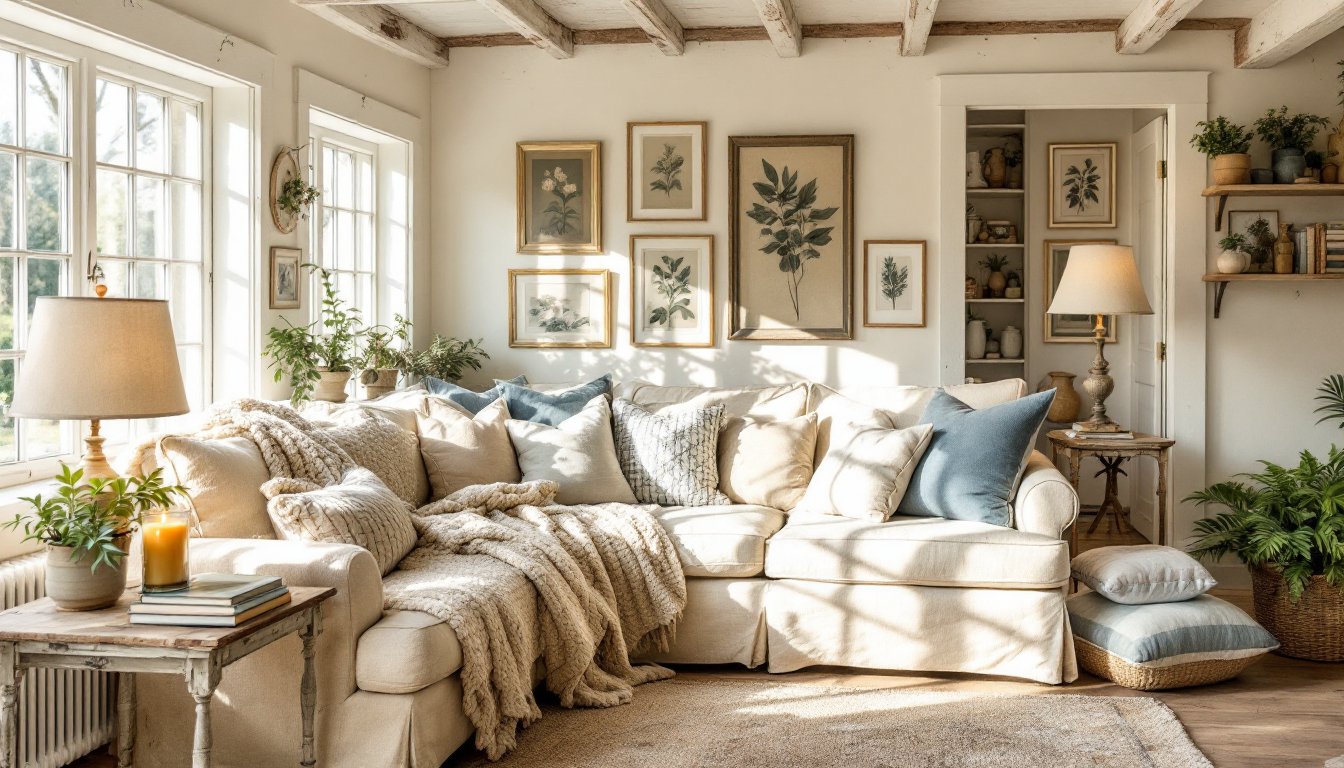
Textures create the tactile comfort that defines coziness. Layer multiple textile materials: a natural wool area rug anchors a seating area, a chunky knit throw drapes over a sofa arm, and linen or quilted cotton pillows in varying sizes invite leaning and nestling. Mix smooth and rough textures, slubby linen beside soft chenille, smooth cotton beside nubby wool.
Rugs serve both functional and aesthetic purposes. A natural jute or sisal rug with a vintage overlay rug creates depth and warmth underfoot. Aim for rugs large enough to ground furniture groupings, small rugs that float in empty space look timid and incomplete.
Throws aren’t decoration: they’re functional comfort pieces. Drape them casually over sofa backs and chairs so they’re within arm’s reach. Quilts, crocheted blankets, or knit throws in cream, soft gray, or muted pattern work beautifully. Pillows should mix sizes, fabrics, and subtle patterns, don’t match sets that look too coordinated. Natural fabrics like linen, cotton, and wool breathe better than synthetics and develop character over time.
Practical Decor Ideas and Finishing Touches
Finishing touches transform a well-arranged room into a warm, lived-in cottage home. Artwork, original paintings, prints, family photographs, and collected botanical pieces, covers walls in thoughtful vignettes rather than leaving them bare. Mix frame styles and mat colors for collected authenticity rather than coordinated perfection.
Displays should feel personal and purposeful. Open shelving works well in cottages when filled thoughtfully: books standing upright and stacked horizontally, vintage pitchers and bowls, candlesticks, family photos, and decorative objects that reflect your interests and travels. Avoid the sterile, perfectly symmetrical look, cottage style celebrates a bit of beautiful chaos.
Incorporate natural elements: potted plants and fresh flowers brighten spaces and soften hard edges. Baskets (woven, wire, or fabric) provide storage that looks intentional and accessible. A wooden ladder leans against walls for blanket storage. Glass jars and vintage containers display dried flowers, kitchen staples, or collected items.
Small functional objects become decor: a wooden cutting board leans on a kitchen shelf, vintage rolling pins hang on a wall, and old kitchen scales sit on counters. This philosophy treats utility as beauty. Displays featuring Top Interior Design Apps can help visualize layouts before purchasing. Consider how Southern interior design uses similar principles of warmth and authenticity.
Room-by-room decor inspiration exists across design platforms, Country Living’s cottage decorating guide and MyDomaine both showcase excellent room-by-room examples. The approach in Southwest interior design also teaches how regional influences enhance authenticity, a principle cottage style embraces fully.
Final Thoughts
Creating a cozy cottage interior happens gradually, it’s not a one-weekend overhaul. Start with your color foundation, invest in quality basics, and layer in textiles and lighting. Personalize with genuine pieces and displays that reflect your life and travels. The result won’t look like a magazine spread, and that’s exactly the point. It’ll feel like home.