HDB Interior Design Singapore: Smart Styling Ideas for Compact Living Spaces
Living in an HDB flat doesn’t mean sacrificing style or comfort. Singapore’s Housing and Development Board apartments are efficient, affordable homes, but they come with real spatial constraints. Whether you’re working with a compact two-room or a standard four-room layout, smart HDB interior design can transform tight quarters into functional, beautiful spaces. The key isn’t fancy furniture or expensive renovations: it’s understanding how to work with what you’ve got. This guide walks you through practical styling ideas, storage hacks, and budget-friendly upgrades that actually work in HDB homes.
Key Takeaways
- HDB interior design succeeds by working with spatial constraints through vertical storage, smart zoning, and multi-functional furniture rather than expensive renovations.
- Lighting strategy—using layered ambient, task, and accent lighting instead of relying on harsh central ceiling lights—dramatically increases perceived space and comfort in compact flats.
- Fitted wardrobes and built-in storage solutions ($1,500–$4,000 SGD) transform cramped bedrooms and living areas by maximizing wall space and eliminating floor clutter.
- Soft, warm neutrals with satin-finish paint combined with mirrors and sheer curtains create brighter, airier interiors without the bland feel of traditional all-white schemes.
- Budget-friendly upgrades like peel-and-stick wallpaper, hardware replacement, floating shelves, and thrifted furniture refinishing deliver high-impact results for under $500 SGD.
Understanding HDB Space Constraints and Design Principles
HDB flats typically range from 35 square meters for a studio to around 110 square meters for a five-room unit, with most residents living in two to four-room layouts. These spaces are inherently compact, which means every square foot counts. Unlike landed properties, you can’t knock down exterior walls or expand outward, so your design strategy must focus on vertical thinking and illusion of space.
The first principle is zoning without walls. Instead of cluttering rooms with dividers, use furniture placement, rugs, and lighting to define different functional areas. A one-room flat can comfortably contain a sleeping zone, work corner, and living space when arranged thoughtfully. Second, embrace minimalism, not minimalist aesthetics. You don’t need stark white walls or Japanese zen vibes: minimalism here means eliminating clutter and choosing pieces that earn their space. Every item should serve a purpose or bring genuine joy.
Third, understand scale and proportion. Oversized furniture swallows a small room whole. A sofa that looks fine in a showroom can dominate an HDB living room. Measure your space, know your wall-to-wall distances, and choose pieces proportional to the room, not your wishlist. Finally, lighting changes everything. Natural light is limited in many HDB units, so layered artificial lighting (ambient, task, and accent) makes rooms feel larger and more inviting than paint color alone ever could.
Maximizing Small Spaces With Clever Storage Solutions
Storage is the heartbeat of functional HDB design. Without it, clutter suffocates the visual space and stresses you out. The good news: walls are real estate, and they’re free.
Vertical storage is non-negotiable in small flats. Floor-to-ceiling shelving, wall-mounted cabinets, and tall narrow bookcases pull the eye upward and create the illusion of height. When choosing shelving, open shelves create airiness while closed cabinets hide visual chaos, use a mix. Open shelves work great for displaying books or decorative items: closed storage keeps everyday clutter (kids’ toys, cleaning supplies, seasonal items) out of sight.
Wall-mounted hooks and pegboards are cheapest and easiest. A hook above the bed holds a reading lamp and headphones. Pegboard strips in the kitchen or home office organize tools and supplies without eating floor space. If you’re renting and can’t drill, adhesive hooks rated for weight do the job and remove cleanly.
Another win: use underutilized spaces. The area under the bed becomes storage with rolling drawers or shallow boxes. Corner gaps that seem wasted? Tall, narrow corner shelves or cabinets fit snugly. Above doors, you’ve got space, install shelving or hang fabric organizers for off-season items. The space inside cabinet doors (pantry, bathroom, bedroom) often goes unused: stick magnetic strips for knives, adhesive baskets for under-sink supplies, or hanging shoe organizers for bathroom clutter.
Built-In Wardrobes and Multi-Functional Furniture
HDB bedrooms are notoriously small, and a standard freestanding wardrobe eats floor area fast. Fitted wardrobes (built-in closets) are the answer, but they’re a bigger investment. Many HDB residents hire carpenters or use modular wardrobe systems to create custom storage that runs floor-to-ceiling along one wall. The cost varies widely, $1,500 to $4,000 SGD depending on materials and finishes, but you recover the space in floor area and the home feels instantly less cramped.
If a full renovation isn’t in the budget, multi-functional furniture does double (or triple) duty. A bed with integrated drawers underneath saves a dresser. A TV console with built-in cabinets replaces a separate storage unit. A dining table that extends only when needed keeps the common area open most days. A sofa bed or ottoman with internal storage works for guests and stashes extra bedding. These pieces cost more upfront than basic alternatives, but they’re worth it in small spaces where every piece must justify its footprint.
Consider murphy beds or wall beds if one bedroom doubles as an office or guest room. When folded up, it disappears, leaving a clean wall and floor for a desk or seating. Installation requires a carpenter and typically runs $2,000–$5,000 SGD, but it transforms a cramped multi-use room into something genuinely functional.
Color and Lighting Strategies for Bright, Airy Interiors
Paint is cheap, and color is powerful. The old rule about painting small spaces white is outdated, many HDB homes use white and it feels bland. Instead, choose soft, warm neutrals (warm grays, soft greiges, very pale warm taupes) that feel inviting without visual heaviness. If you want color, pale pastels on one accent wall can add personality without shrinking the room. Avoid dark, saturated colors on all walls: they close in the space.
Critically, match your paint sheen to your space. Matte finishes hide imperfections but absorb light: satin and semi-gloss finishes reflect light, making rooms feel brighter. In a dim HDB unit, satin-finish paint on walls bounces light around far better than matte. For ceilings, painting them the same color as the walls (or slightly lighter) increases perceived height. A dark ceiling makes a room feel like a cave.
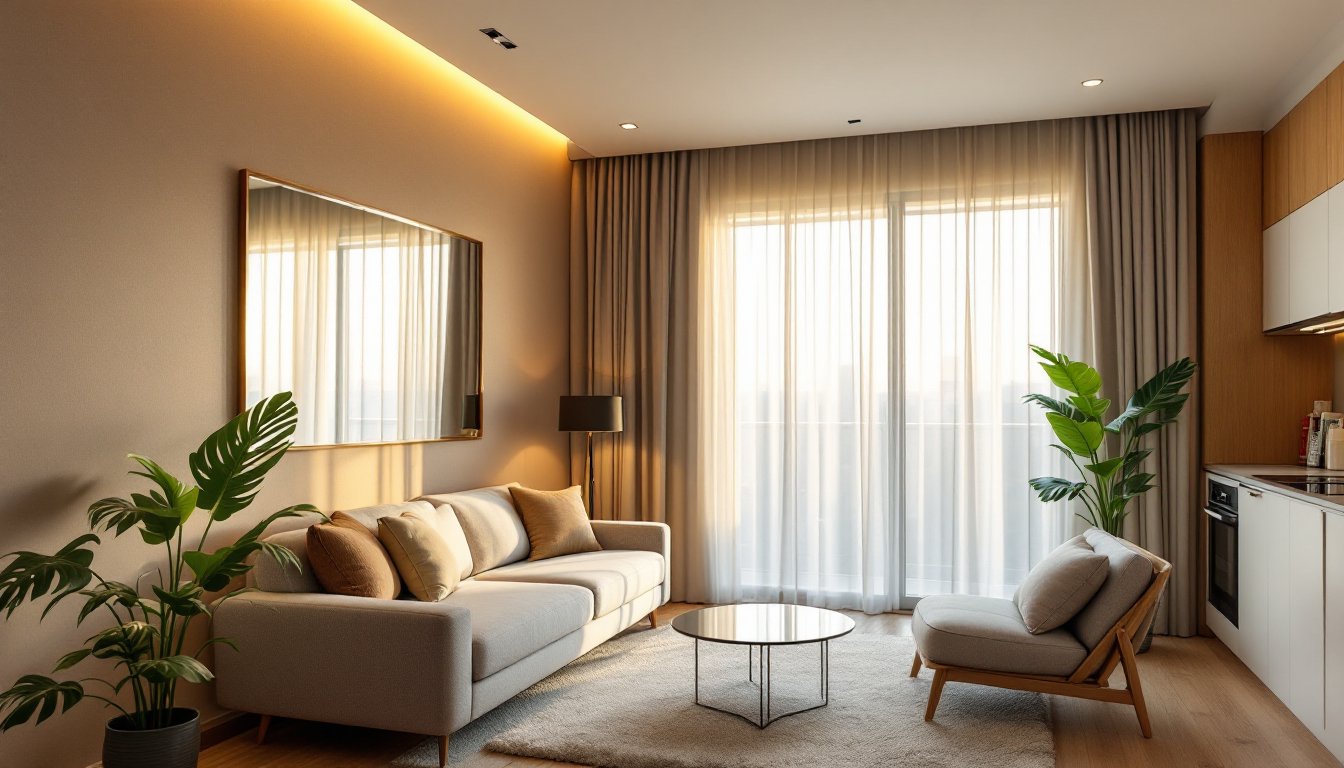
Lighting is where magic happens. Most HDB flats have a single central ceiling light, and it’s terrible, harsh, unflattering, and doesn’t solve spatial issues. Swap it for dimmable LED panels or a modern flush mount with soft color temperature (2700K). Add task lighting (desk lamps, reading lights) where you actually do things. String lights, wall sconces, or a floor lamp in a corner add accent lighting that creates depth and coziness. The total effect: a room lit with three light sources feels larger and more sophisticated than one bright overhead.
Natural light matters too. Sheer curtains diffuse sunlight without blocking it, keeping rooms bright while maintaining privacy. Mirrors strategically placed opposite windows bounce natural light deeper into the flat. If you lack windows or direct sun, full-spectrum LED bulbs approximate daylight and reduce the cave-like feeling.
Budget-Friendly Decor and DIY Upgrades for HDB Homes
You don’t need a designer or five-figure budget to make an HDB feel intentional. Start with what you already own: declutter ruthlessly. Photos of beautiful homes share one trait, stuff is curated, not abundant. Donate or sell items you don’t use. What remains should feel chosen, not crammed in.
Next, focus on quick, high-impact upgrades: Paint walls (labor is your cost, materials are cheap). Replace cabinet hardware (new knobs or handles transform old cabinets for under $50 SGD total). Swap faucets in bathroom or kitchen (DIY plumbing fittings are straightforward: budget $100–$300 SGD). Install floating shelves (a $30 shelf and cheap brackets can replace a bulky bookcase). All of these take a weekend and cost far less than furniture.
For decor, plants add life without budget strain. A few large potted plants (monstera, pothos, snake plant) fill vertical space and soften hard corners. They’re cheap, tough, and make a room feel alive. Rugs define zones and add warmth, a well-placed area rug anchors a seating area and makes it feel intentional, not like furniture floating in void.
DIY wall treatments work well in rentals too. Peel-and-stick wallpaper on one accent wall costs $15–$40 SGD and removes cleanly. Washi tape borders or geometric designs from painter’s tape let you experiment without commitment. Floating shelves with a fresh coat of paint breathe new life into old walls.
For furnishing on a budget, explore Carousell, Facebook Marketplace, or thrift stores for solid used pieces. A wood side table, small bookshelf, or desk refinished with paint and new hardware becomes something custom. Sites like Homedit and Apartment Therapy offer endless budget makeover ideas tailored to apartment living. Design apps, including some Top Interior Design Apps for iPad, let you visualize layouts and color schemes before committing.
If you’re tackling DIY upgrades, invest in basic tools: a cordless drill, stud finder, level, and tape measure unlock most projects. Safety first, wear safety glasses when drilling or cutting, gloves for rough surfaces, and a dust mask when sanding or painting in closed spaces. Check with your HDB management office before structural changes: some modifications require approval or written permission, especially if they affect shared walls or infrastructure.
Conclusion
HDB interior design isn’t about fighting your space, it’s about working with it. Smart storage, intentional color and lighting, and modest, purposeful decor transform tight quarters into homes that feel spacious and personal. Most winning upgrades cost less than $500 SGD and take a weekend or two. Start with one project, see how it feels, and build from there. Your HDB is a foundation: how you style it makes it yours.