Master Your Bedroom Decoration: 7 Modern Design Ideas to Transform Your Space in 2026
A well-decorated bedroom goes far beyond aesthetics, it’s a personal sanctuary where you start and end your day. Whether you’re tackling a complete bedroom decoration overhaul or making strategic updates, the right approach combines function, comfort, and style. The best living room decor and bedroom decor share a common thread: intentional choices about color, furniture, and lighting that reflect how the space will actually be used. This guide walks you through seven practical, modern design ideas that work for any budget and skill level, helping you create a room that feels both inviting and genuinely restful.
Key Takeaways
- Start your bedroom decoration with a strategic color palette using the 60-30-10 rule: 60% dominant color, 30% secondary color, and 10% accent color to maintain a cohesive, non-monotonous design.
- Select functional furniture that maximizes space, such as beds with appropriate clearance, double-duty pieces like storage benches, and furniture with raised legs that prevent a cramped feel.
- Layer lighting in three stages—ambient, task, and accent—with dimmers and warm white bulbs (2700K) to create a relaxing atmosphere and flexible brightness for different activities.
- Invest in quality textiles including breathable sheets, thermal-lined curtains, and layered throw pillows to anchor comfort and add textured depth to your bedroom decoration.
- Use wall art and decorative mirrors as focal points and to reflect light, while adhering to the ‘one out, one in’ rule to prevent clutter and maintain visual interest.
- Prioritize hidden storage solutions like under-bed boxes and closet organization systems, keeping only curated items on visible surfaces to ensure your bedroom feels peaceful and intentional.
Choose a Color Palette That Sets the Mood
Color is the quickest and most affordable way to transform bedroom decoration. Your palette should reflect how you want to feel in the space, calm, energized, cozy, or sophisticated. Neutral base colors like soft grays, warm whites, and muted taupes work as foundational walls: they’re forgiving and let you shift accents seasonally without repainting.
If you’re drawn to deeper tones, jewel-box colors like dusty sage, muted navy, or warm terracotta can work beautifully in bedrooms, especially paired with adequate lighting and lighter textiles to prevent the space from feeling cramped. Consider the room’s natural light: north-facing rooms benefit from warmer undertones, while south-facing spaces can handle cooler hues.
The 60-30-10 rule is a practical starting point: 60% dominant color (often walls), 30% secondary color (bedding, curtains), and 10% accent color (pillows, art, small objects). This balance keeps the space cohesive without feeling monotonous. Room decor ideas often come from inspiration boards or paint samples, buy a quart of your top choice and test it on an inconspicuous wall section for three to five days under different lighting conditions.
Select Functional Furniture That Maximizes Space
Bedroom furniture should work hard, not just look pretty. Start with an appropriately sized bed frame, measure your room first and choose a bed that leaves at least two feet of clearance on all sides for safe movement and a balanced visual. A queen-size bed (60″ × 80″) is the most versatile for standard bedrooms: smaller rooms suit full or twin sizes, while master suites can accommodate a king (76″ × 80″).
Beyond the bed, prioritize pieces that serve double duty. A low-profile dresser becomes a display surface for room decor items and provides necessary storage. A bench at the foot of the bed offers seating and hidden storage inside. Nightstands don’t have to match or be traditional, a narrow console, floating shelf, or stacked vintage suitcases create personality while holding lamps, books, and essentials within arm’s reach.
Wall decor for living room and bedroom spaces often involves floating shelves or wall-mounted desks that maximize vertical space without consuming floor area. Avoid oversized furniture that crowds the room: even in larger bedrooms, breathing room makes the space feel more restful. Choose pieces with raised legs rather than solid bases, this creates visual lightness and makes cleaning easier. One professional tip: move heavy furniture away from walls slightly to ground it in the space and prevent the claustrophobic “pushed against the wall” look.
Layer Lighting for Ambiance and Practicality
Proper bedroom lighting requires three layers: ambient (overhead or general light), task (reading or dressing), and accent (mood or decorative). Many bedrooms rely too heavily on a single overhead fixture, which creates harsh shadows and limits flexibility.
Start with ambient lighting via a ceiling fixture, recessed lights, or a fabric drum shade that diffuses light evenly. Task lighting at the bedside is non-negotiable, bedside lamps with three-way bulbs let you adjust brightness for reading without waking a partner. Add a small desk lamp if you work from bed.
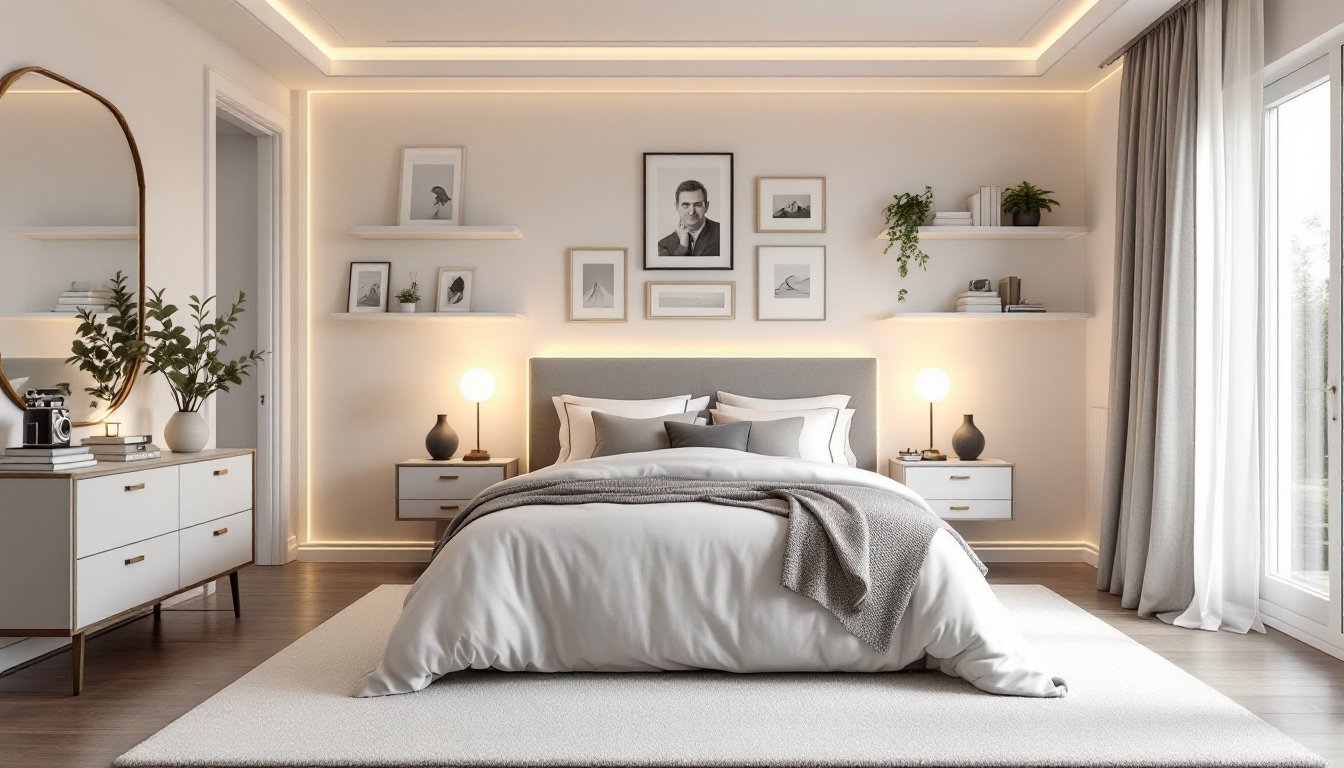
Accent lighting transforms the mood. Wall sconces flanking the bed eliminate the need for table lamps and free up nightstand space. LED strip lighting behind a headboard or along baseboards creates subtle depth. String lights or a dimmable pendant in a corner adds warmth without taking up surface space. Install dimmer switches on main fixtures so you can transition from task lighting (getting ready) to ambient warmth (winding down).
Choose bulbs carefully: warm white (2700K color temperature) promotes relaxation, while cool white (4000K+) suits dressing areas. Smart bulbs let you adjust color temperature remotely, useful for aligning lighting with your sleep-wake cycle.
Add Textiles and Soft Furnishings for Comfort
Textiles anchor comfort in bedroom decoration. A quality bed foundation starts with a supportive mattress and breathable sheets (Egyptian cotton, linen, or high-quality cotton blends at 400+ thread count feel noticeably different than budget options). Layer the bed with a duvet or quilt, then add throw pillows and a lightweight throw blanket draped over the foot or side.
Curtains or blackout shades serve dual purposes: light control and thermal insulation. Thermal-lined curtains reduce heat loss in winter and block morning light in summer. If privacy isn’t an issue, linen sheers filter light softly. A bedroom rug anchors the seating area and adds warmth underfoot, a 5′ × 8′ or 8′ × 10′ size is standard, placed under the bed’s foot or centered in the room.
Wall decor for living room spaces and bedrooms benefits from soft, textured elements. A fabric headboard (upholstered or tapestry-backed) adds visual interest and sound dampening. Linen wall hangings or woven tapestries introduce texture without the permanence of paint. Throw pillows in varied textures, velvet, cotton, linen, create depth and invite you to settle in. Launder textiles seasonally: fresh, clean fabrics are a quick refresh that costs nothing.
Incorporate Wall Art and Decorative Accents
Wall art personalizes the space and breaks up blank walls. A gallery wall above the nightstand or an oversized piece centered on the main wall serves as the room’s focal point. Keep scale proportional: a large blank wall needs larger art (36″ × 48″ or bigger), while smaller walls suit a 24″ × 36″ print or smaller clustered pieces.
Choosing art doesn’t require expensive originals, high-quality prints from museums or independent artists, framed posters, or fabric wall hangings all work. The frame itself becomes part of the design: matching frames (metal, wood, or painted) look intentional, while mismatched vintage frames add eclectic charm. Living room decor and bedroom decoration both benefit from artwork that reflects your interests rather than generic landscapes, your space should feel like yours.
Decorative accents keep the room from feeling sterile. A few carefully chosen items, a vintage camera, stacked coffee table books, a potted plant, or a decorative mirror, add personality. Avoid clutter by adhering to the “one out, one in” rule: each new item replaces something old. A large mirror opposite a window reflects light and makes the room feel airier. According to resources on home design inspiration, balanced wall decor creates visual interest without overwhelming the space, especially in rooms where rest is the primary function.
Organize Storage Solutions That Keep Clutter Hidden
Storage is the invisible backbone of a beautiful bedroom. Without it, even a perfectly decorated room devolves into visual chaos. Start by assessing what actually needs to live in the bedroom: seasonal clothing, shoes, everyday items, and sleep essentials. Everything else belongs elsewhere.
Under-bed storage boxes hold seasonal blankets, pillows, or off-season clothing, choose low-profile options with wheels for easy access. A dresser with five to seven drawers handles daily clothing: vertical dividers keep folded items from toppling. Closet organization (hanging rods, shelves, and bins) is foundational but often overlooked: a standard closet with the right system holds significantly more than one without organization.
Wall-mounted shelving above a desk or in corners provides open storage for books, decorative boxes, and plants while keeping floor space clear. Decorative bins on shelves hide miscellaneous items while maintaining visual order. Resources like budget-friendly decor transformations emphasize that storage doesn’t have to be expensive, IKEA units, repurposed furniture, and DIY shelving deliver function at modest cost.
The key: visible storage (shelves, open drawers) should display curated items only. Everything else gets contained in closed storage, under the bed, or in closets. A cluttered bedroom feels unsettling regardless of how nicely it’s decorated: prioritize hidden storage.
Conclusion
Transforming your bedroom decoration into a modern, functional sanctuary doesn’t require a complete overhaul. Start with color, layer in functional furniture and smart lighting, then add comfort through textiles. Finish with thoughtful wall art and hidden storage. Each element builds on the previous one, creating a cohesive, restful space that works for how you actually live. Your bedroom should feel like a retreat, not a showroom, prioritize practicality and personal preference over trends, and you’ll create a space you genuinely love returning to each night.