Transform Your Bedroom in 2026: 7 Essential Decor Ideas That Actually Work
Your bedroom should be the one room in your home where you can truly unwind. Whether you’re starting from scratch or refreshing a tired space, the right bedroom decor ideas make all the difference. The good news? You don’t need a six-figure budget or a design degree to pull it off. This guide walks you through seven practical, actionable decor strategies that work in real homes, not just Pinterest boards. From layout planning to lighting choices, we’ll cover what actually transforms a bedroom into a sanctuary you’ll want to spend time in.
Key Takeaways
- Effective bedroom decor ideas start with a well-planned layout, proper furniture placement, and intentional style foundation before making any purchases or design changes.
- Paint is the most cost-effective bedroom decor transformation tool, with light neutral tones making small spaces feel larger while dark colors create intimate retreats when rooms have adequate natural light.
- Prioritize quality bedding and strategic layering with 2–3 colors maximum to create visual depth without clutter while maintaining the focal point of your headboard.
- Install a three-layer lighting system including dimmer-controlled overhead lights, bedside task lamps, and accent lighting to serve different purposes and create a cozy, adaptable bedroom atmosphere.
- Smart window treatments like blackout curtains or cellular shades combined with sheer layers provide both light control and privacy while making windows appear larger when extended beyond the frame.
Design Your Layout and Choose Your Style Foundation
Before you hang a single picture or buy paint, nail down your layout and style direction. A well-planned bedroom starts with furniture placement that makes sense for your space, and your daily routine.
Bedroom Layout Ideas
Start by measuring your room wall-to-wall and noting doors, windows, and any built-in features. Sketch a rough floor plan on paper or use a free tool like Floorplanner to test furniture placement before moving anything. The bed is usually the anchor: centering it on the main wall creates visual balance, though corner placement works if your room is tight.
Consider traffic flow. You should be able to walk from the door to the bed and dresser without navigating an obstacle course. Nightstands flanking the bed are standard, but if space is limited, one sturdy 24–30 inch-deep table on the dominant side does the job. Keep at least 2–3 feet of walking space around the bed and don’t block windows with tall furniture.
Style foundation comes next. Are you drawn to modern minimalism, farmhouse warmth, industrial edges, or cozy traditional? Look at sitting room decor ideas or front room decor ideas from spaces you admire, bedrooms share many principles with living areas. Pick two or three core colors and a texture palette (wood, metal, fabric) to build around. This prevents the “everything everywhere” feeling and makes decorating decisions easier down the line.
Write down your style words, calm, energetic, sophisticated, playful, and refer back to them when shopping. This keeps your choices cohesive even when you’re buying pieces months apart.
Paint Colors and Finishes That Set the Mood
Paint is the fastest way to transform a bedroom because it covers the most surface area for the least money. A gallon of quality interior paint (at 350–400 sq. ft. coverage per gallon) costs $30–$50 and can change the entire energy of the room. Your color choice sets the emotional foundation for everything else.
Light and Airy Palettes
Soft, neutral tones like warm whites, pale grays, and light beiges make small rooms feel bigger and provide a calm backdrop for any decor style. These colors reflect light and work well if your bedroom doesn’t get much natural sunlight. Pair them with white or light-stained trim to maximize brightness.
Cream and soft taupe are forgiving colors that complement both cool and warm accent colors. They’re also practical, scuffs and dust show less than stark white, and they won’t look dingy in a few years. When painting, use a semi-gloss or satin finish on trim (easier to clean and slightly reflective) and matte or eggshell on walls (hides minor imperfections and absorbs light for a calming effect).
Test paint samples on your walls before committing. Paint a 2×3 foot patch and observe it at different times of day, morning light, afternoon, and evening with artificial lights on. Colors shift dramatically depending on lighting.
Dark and Dreamy Tones
Don’t shy away from deeper colors if your bedroom gets decent natural light. Deep charcoal, navy, forest green, or warm gray create intimacy and visual interest. Dark walls make the room feel smaller but more enveloping, perfect for a restful retreat. They pair beautifully with light bedding, wood furniture, and metallic accents.
Dark colors demand proper prep work. Use a quality primer (two coats if going from white to very dark) to ensure even coverage and prevent the original color from showing through. Expect to apply 2–3 coats of dark paint itself: cheaper paint requires more coats and leaves visible brush marks.
Painting living decor ideas often use accent walls, painting one wall a bolder shade while keeping others neutral. In a bedroom, this works well behind the headboard to create a focal point without overwhelming the space. Apply painter’s tape along the ceiling line, use a cutting-in brush for crisp edges, and roll the field in overlapping W-patterns for even coverage.
Key Statement Pieces: Headboards, Bedding, and Focal Points
Your headboard and bedding deserve attention because they occupy the largest visual real estate in the room. A thoughtful choice here simplifies the rest of your decorating.
Headboards don’t have to be expensive. A simple upholstered frame ($150–$400) instantly softens the look and provides a comfortable backrest for reading. Wooden headboards in natural finishes suit farmhouse and rustic styles: metal frames work for modern or industrial schemes. If you’re handy, DIY options include mounting reclaimed wood planks, installing shiplap, or even hanging fabric panels from a curtain rod, all under $100 for materials.
Bedding sets the tone for comfort and style. Invest in quality sheets (thread count 300–600 is sufficient: higher counts don’t always mean better) because you spend 8+ hours a night on them. Egyptian cotton or cotton blends feel better than cheap polyester and last longer. A good set runs $40–$80, but it’s worth it for durability and sleep quality.
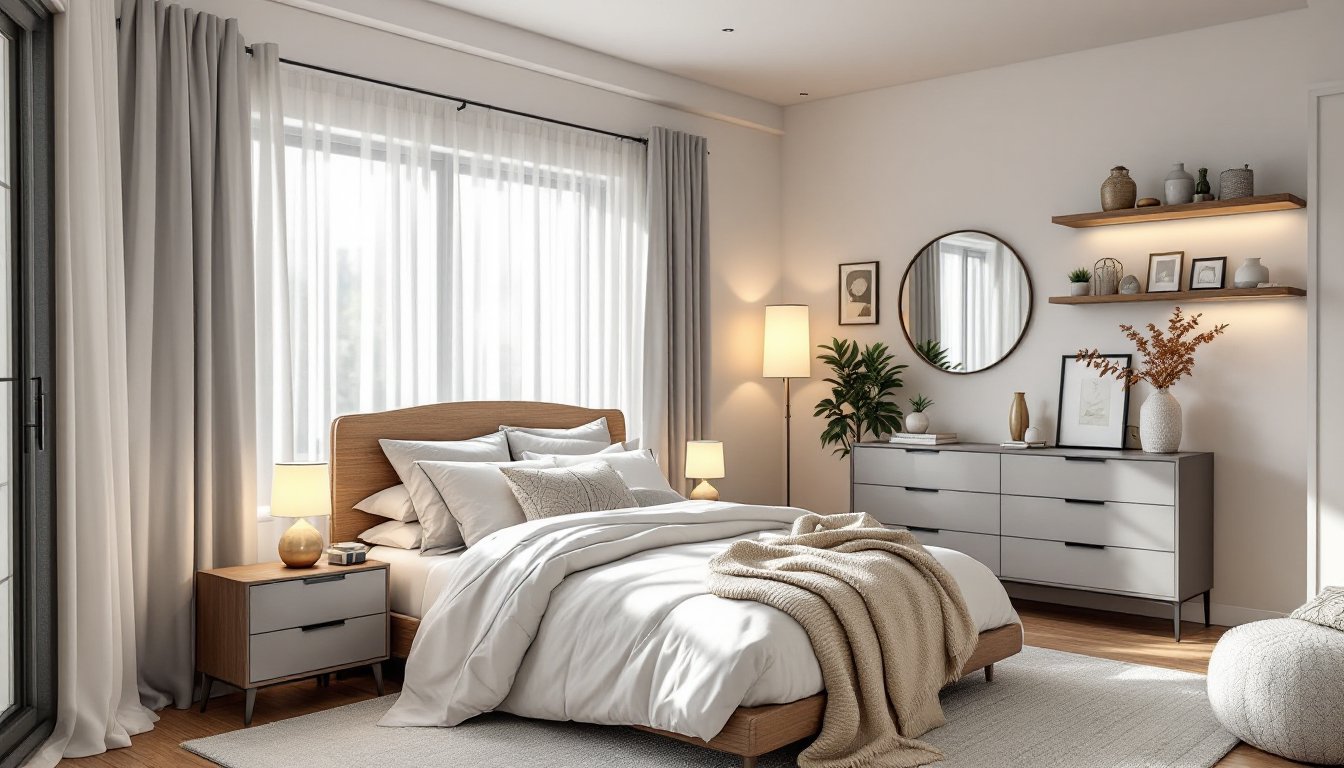
Layering bedding creates visual depth. Start with fitted sheets, add a flat sheet or duvet cover, then a throw blanket folded at the foot or draped over one corner. A decorative throw pillow or two adds color and pattern without commitment, easy to swap seasonally. Stick to 2–3 colors max so the bed doesn’t look chaotic.
Other focal points matter too. A gallery wall above a dresser, a statement mirror opposite the window to reflect light, or floating shelves displaying styled objects (books, plants, candles) draw the eye and add personality. Keep accessories minimal and intentional: a cluttered nightstand prevents restful sleep. One lamp, one book, maybe a water glass, that’s it.
Smart Lighting and Window Treatments
Lighting in a bedroom serves multiple purposes: task lighting (reading, getting dressed), ambient lighting (setting mood), and accent lighting (highlighting focal points). You’ll need at least three layers to cover all bases.
Start with overhead lighting controlled by a dimmer switch. Dimmers cost $10–$20 and replace standard switches, no electrician needed for a basic install if you’re comfortable with basic wiring. A ceiling fixture or flush-mount light provides general illumination, and a dimmer lets you adjust brightness from bright (getting ready) to low (winding down). Avoid harsh bright-white bulbs (5000K color temperature): choose warm white (2700K) for a cozy feel.
Bedside task lighting is essential. A simple table lamp (30–40 inches tall from floor) flanking each side of the bed lets you read without disturbing a partner. Swing-arm wall sconces save nightstand space and adjust the light direction, handy if you share a bed. These run $30–$100 per sconce and mount to the wall above the nightstand.
Accent lighting highlights your focal point. A small lamp on a dresser, LED strip lighting behind floating shelves, or a soft floor lamp in a corner adds depth and visual interest. Avoid fluorescent or overly bright lighting, it’s jarring at night and drains energy from warm, welcoming decor.
Window treatments control light and privacy while contributing to the room’s overall look. Blackout curtains or cellular shades block 99% of outside light, making them ideal for bedrooms (especially if you work night shifts or have a street lamp outside). Layering sheer curtains under blackout ones gives you flexibility, sheer during the day for soft light, blackout at night for total darkness.
Measure your window opening carefully: width from wall to wall inside the frame, height from the top of the window to where you want the treatment to end. Curtains that hang floor-to-ceiling and extend 4–6 inches beyond the window frame on each side make the window look larger. Budget $30–$80 per panel for quality curtains: cheap fabric looks thin and sags after one wash.