Bathroom Decor Ideas That Transform Your Space in 2026: Budget-Friendly and Stylish Solutions
Your bathroom doesn’t need a six-figure renovation to feel fresh and intentional. Whether you’re working with a cramped half bath or a sprawling master suite, smart bathroom decor ideas can completely shift how the space functions and feels. The trick isn’t splurging on high-end fixtures, it’s making thoughtful choices about style, color, lighting, and layout that work within your budget and lifestyle. This guide walks you through the key decisions: finding your style direction, maximizing tight spaces, choosing colors that work, and layering in accessories that make the bathroom feel designed, not just functional. Ready to turn your bathroom into a space you actually enjoy spending time in? Let’s dig in.
Key Takeaways
- Bathroom decor ideas don’t require expensive renovations—thoughtful choices about style, color, lighting, and layout deliver maximum impact within any budget.
- Choose a clear style foundation (modern minimalist, spa, or luxury) before purchasing anything to maintain visual consistency and prevent design chaos.
- Maximize small bathroom spaces using light neutral colors, oversized mirrors, floating shelves, and minimal counter clutter to create an illusion of openness.
- Layer task lighting (sconces near mirrors at eye level) with ambient and accent lighting to provide functionality and set an inviting mood.
- Affordable accessories like woven baskets, plants, coordinated dispensers, and textured items transform a bathroom without major renovation costs.
- Stick to a single accent wall, patterned element, or hardware finish to avoid visual noise and create an intentional, sophisticated look that ages well.
Choose Your Bathroom Style Foundation
Before buying a single towel or paint can, nail down your style direction. A clear foundation keeps decisions consistent and prevents the visual chaos that happens when modern chrome mingles awkwardly with farmhouse wood or eclectic mishmash takes over.
Modern Minimalist Approaches
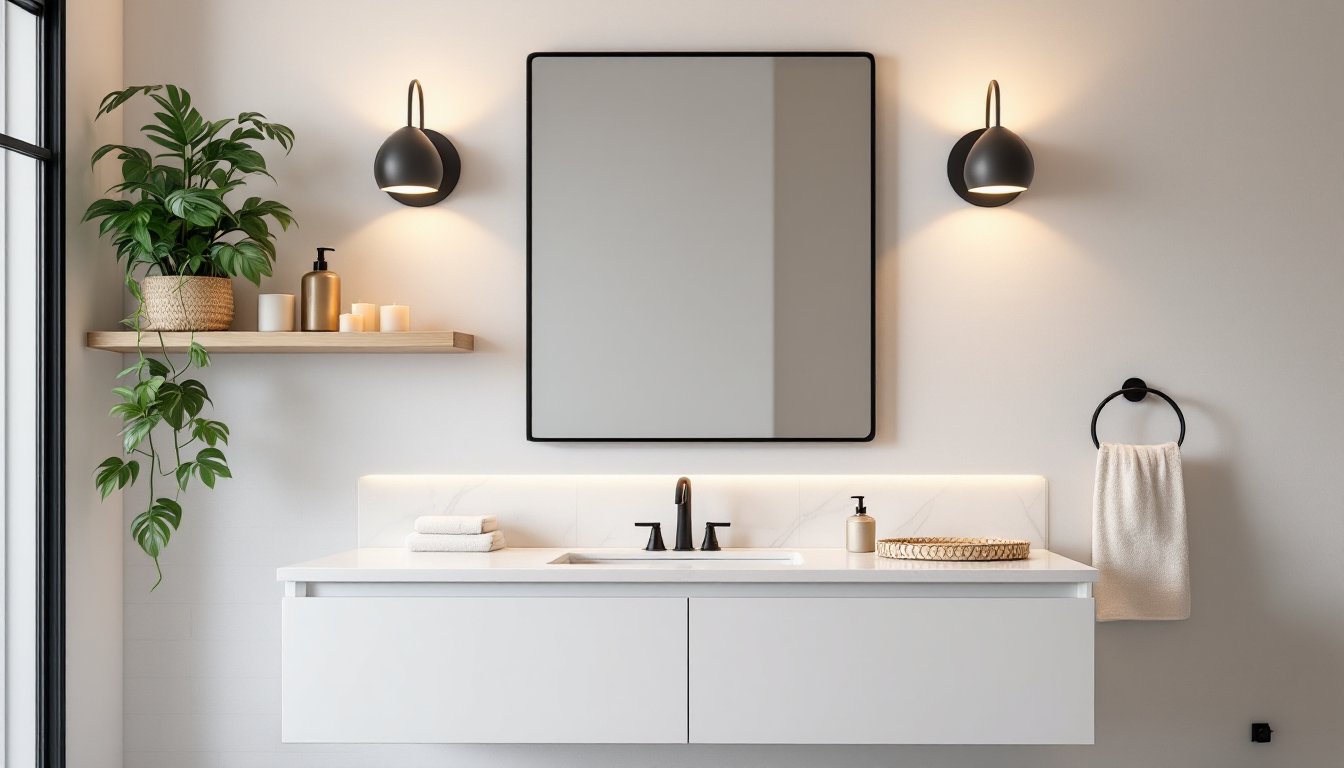
Modern minimalist bathrooms strip away excess. Think clean lines, simple vanities, and a monochromatic or low-contrast color scheme. The goal isn’t coldness, it’s intentionality. A floating vanity with a smooth white sink, paired with subway tile and minimal hardware, creates visual calm. Keep patterns to zero or one subtle option. Storage happens behind closed cabinet doors or on floating shelves positioned at eye level, so surfaces stay bare and breathing room dominates.
This style works especially well in smaller bathrooms because visual clutter reads as physical clutter. A single statement piece, like a geometric mirror or a single plant, becomes the focal point rather than competing accessories fighting for attention. Materials stay simple: concrete, natural wood, matte finishes, stainless steel. The payoff? A space that feels spa-like without trying.
Spa and Luxury Aesthetics
Spa and luxury bathrooms invite relaxation through texture, warmth, and layered sensory details. Soft neutrals, warm grays, creams, warm whites, pale greiges, form the base. Natural materials matter: marble or stone surfaces, warm wood tones (usually on shelves, vanity accents, or frames), and plush textiles. A thick, high-quality towel in cream or soft gray isn’t an accessory: it’s a foundation piece.
Lighting takes on importance here. Unlike minimalist designs that favor task efficiency, spa lighting combines ambient warmth with accent lighting that highlights texture. Candles, woven baskets for storage, potted plants (think low-light varieties like pothos or snake plants), and coordinated ceramic soap dispensers and canisters create small vignettes that feel intentional. Luxury finishes, brushed gold or matte black hardware, replace chrome. The texture comes from natural fibers, stone, and carefully chosen accessories that feel curated rather than scattered.
Maximize Small Bathroom Spaces With Smart Design
Small bathrooms demand strategy. Cramming accessories onto the counter or hanging clutter from hooks makes the space feel tinier and more stressful. Instead, use vertical space and hidden storage to reclaim visual breathing room.
Start with color: light, neutral tones, soft whites, pale grays, pale blues, reflect light and make boundaries feel further away. If you want wallpaper, choose a subtle pattern or a light background: busy prints close in the space. Mirrors are non-negotiable. A large mirror (or multiple smaller mirrors) above the sink or on an accent wall bounces light and depth. If space allows, an oversized mirror or even a full-wall mirror dramatically opens up the visual footprint.
Floating shelves and wall-mounted storage beat floor-standing cabinets because they expose the floor, making the room feel larger. Narrow, vertical storage, a tall cabinet or slim shelving unit tucked into a corner, holds supplies without eating floor space. Use trays to corral small items (soap, lotions, candles) into neat groupings. This keeps the visual chaos down and makes cleaning faster.
In tiny bathrooms, shower curtains matter. An extra-long or full-ceiling shower curtain in a light color improves perceived height. If you have a glass enclosure instead, keep it clean: visibility equals spaciousness. Finally, keep counter space mostly clear. A single small caddy or tray with two or three regularly used items beats scattered bottles. Guests notice intention, not abundance.
Color Palettes and Finishes That Work
Color sets the mood. Neutral palettes, soft grays, warm whites, beiges, creams, pale blues, create calm and allow flexibility for seasonal or easy refreshes through accessories. Neutrals also tend to age well: they don’t feel trendy after two years.
For a pop of personality, add color through swappable items: towels, a small rug, artwork, or plants. A forest green or warm terracotta towel against creamy walls feels intentional without committing you to paint. If you’re brave, a single accent wall in a deeper shade, sage green, soft navy, or warm charcoal, can anchor the space and add sophistication without overwhelming a small footprint.
Pattern should be limited. One patterned element (a tiled accent wall, geometric wallpaper, or a patterned bath mat) is enough: balance it with neutrals elsewhere. Mixing too many patterns creates visual noise that ages poorly. Finishes matter equally. Pair finishes intentionally: matte black hardware with warm wood looks intentional, while mixing chrome with brushed gold looks accidental. Polished surfaces (like glass, chrome, or marble) feel sleek and modern: matte or textured finishes (matte black, brushed nickel, natural wood) feel warmer and more spa-like. Choose a direction and repeat it throughout fixtures, hardware, and accents.
When considering colors and layouts, consulting bathroom layout ideas helps you understand how color flows through the space and how finishes interact with your plumbing and cabinet placement.
Lighting and Mirrors for Function and Style
Bathroom lighting has two jobs: task lighting (to shave, apply makeup, or see clearly) and ambient lighting (to set mood and reduce shadows). Most bathrooms fail at both by relying on a single overhead fixture.
Task lighting belongs near the mirror. Sconces placed at eye level on either side of a mirror, roughly 36 to 40 inches apart, minimize shadows on the face and provide even, flattering light. If your budget allows only one upgrade, vanity sconces deliver the highest quality-of-life return. A frosted or warm-tinted bulb (2700K color temperature) softens the light and feels less institutional than cool white (5000K).
Ambient lighting adds warmth. A dimmer on your overhead light, a small chandelier or pendant in a decorative style, or recessed lights with a warm bulb create an inviting backdrop. Accent lighting, a subtle LED strip behind floating shelves or under vanity edges, adds polish without effort. Candles bridge function and design: they literally add light and create ritual.
Mirrors do double duty. Beyond reflection, a statement mirror becomes the focal point. A large frameless mirror in a modern bath, a wood-framed mirror in spa or rustic styling, or a geometric frame in minimalist design anchors the vanity. Scale matters: a mirror that’s too small looks awkward, while one that’s too large can overwhelm. A general rule: the mirror should span most of the vanity width. If you’re shopping for guidance on how mirrors fit into a complete bathroom plan, resources like Remodelista offer curated inspiration for vanity arrangements and lighting setups alongside overall bathroom design.
Accessory and Texture Ideas on Any Budget
Accessories are where personality lives, and the best part? They’re the easiest budget refresh. You likely already own items that can be styled intentionally: plants, candles, small bowls, or textured baskets.
Start with texture. Woven baskets (rattan, seagrass, or wicker) soften hard surfaces and add warmth. A wooden shelf, natural fiber bath mat, or ceramic soap dispenser brings organic texture that feels curated. Layer textures: smooth marble, rough woven fiber, soft towels, and matte ceramic create visual and tactile interest without clutter.
Common affordable updates include swapping generic soap dispensers for a coordinated set in your finish (matte black, brushed gold, or ceramic in your color palette). A small tray corrals bottles and containers, reducing visual scatter. Canisters (glass, ceramic, or stainless steel) store everyday items and look intentional. Towel ladders or hooks in matching finishes replace haphazard hangers.
Plants add life. Low-light bathroom plants like pothos, snake plants, or ZZ plants survive humidity and add softness. A small candle or two, unscented or in a soft fragrance, creates ritual without overwhelming. Wall art, a small rug, or even a single item on floating shelves gives you a way to add restroom ideas decor and bedrooms decor styling principles to your bathroom without major changes.
For fresh inspiration, platforms like ImproveNet offer cost guides and real renovation photos that show how accessories transform spaces at different budget levels. And if you’re drawn to bathroom styling seen on TV or home shows, HGTV features real bathrooms where homeowners explain their accessory and texture choices. Don’t shy away from living room wall decor principles either, if a neutral paint tone or a textured accent works in a bedroom or living room, similar ideas translate to spa-style bathrooms.