Create Your Own Luxury Hookah Lounge at Home: A 2026 Interior Design Guide
A hookah lounge doesn’t need to be a trendy bar downtown. Homeowners are increasingly creating private relaxation spaces that capture that warm, welcoming atmosphere, complete with plush seating, moody lighting, and thoughtful design choices. Building a hookah lounge at home is more about crafting an immersive retreat than following a rigid checklist. Whether you’re hosting gatherings or carving out a peaceful escape, this guide walks you through the essentials: selecting the right room, arranging furniture strategically, managing air quality, and layering in decor that transforms an ordinary space into a sophisticated sanctuary.
Key Takeaways
- Creating an interior design hookah lounge at home requires selecting an isolated room with 150–250 square feet and planning proper ventilation before committing to your layout.
- Layer your lighting with warm-toned LED bulbs, dimmers, table lamps, and accent pieces like string lights and lanterns to build ambiance without harsh overhead lights.
- Choose a rich color palette of deep burgundy, forest green, navy, or terracotta paired with neutral walls, then anchor the room with a textured accent wall as your focal point.
- Install a dedicated exhaust fan vented outside (200–300 CFM) or combine a HEPA air purifier with a dehumidifier set to 40–50% humidity to manage smoke and prevent odor buildup.
- Arrange seating in U-shaped or semi-circular clusters around a sturdy central low table, then layer in throw pillows, an area rug, and curated accessories that reflect your personal style.
- Incorporate finishing touches like plants, wall art hung at eye level from seated positions, and a hidden Bluetooth speaker for ambient music to complete your sophisticated sanctuary.
Choosing the Perfect Room and Layout for Your Hookah Lounge
Start by picking a space that’s separate from your main living areas. A finished basement, spare bedroom, bonus room, or even a covered patio works well. The key is isolation, hookah smoke lingers, and you don’t want it drifting through your entire home.
Measure your room carefully. A comfortable lounge typically needs 150–250 square feet to avoid feeling cramped. Account for seating clusters, a low table for the hookah, and walkway space. Avoid tight corners where smoke gets trapped and creates stuffiness.
Check existing utilities before committing to a layout. You’ll want easy access to electrical outlets for lighting and potentially a fan or ventilation unit. If your room is windowless, ventilation becomes non-negotiable. A basement’s concrete walls and low ceilings are forgiving for lounge aesthetics, but you’ll need to plan HVAC modifications upfront. Many homeowners underestimate this step and regret it later.
Essential Furniture and Seating Arrangements
The backbone of a hookah lounge is comfortable, low seating. Floor cushions, poufs, and low-slung lounge chairs create that authentic vibe. Moroccan-style floor cushions or Japanese floor seating works beautifully and keeps the design cohesive.
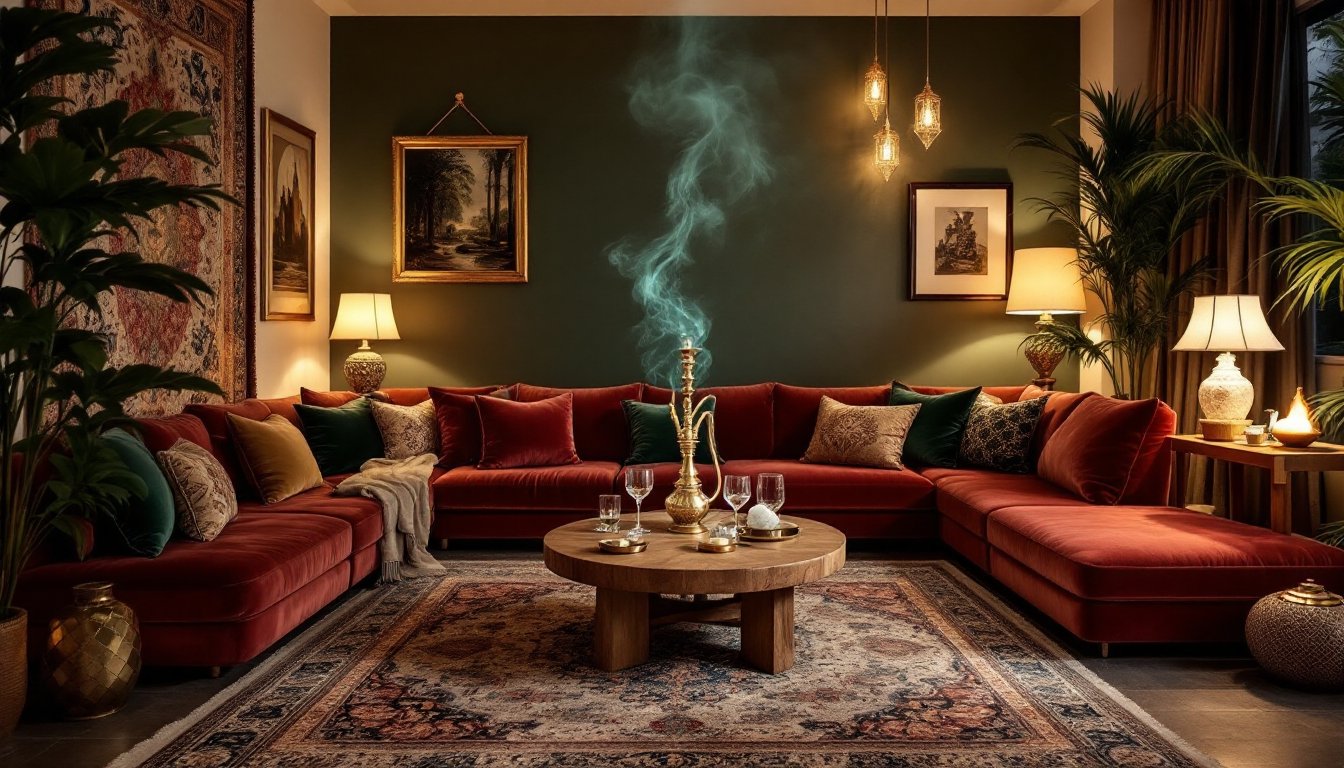
If you prefer elevated seating, a mix of furniture is fine. A sectional sofa paired with ottomans and throw pillows gives flexibility. The goal is creating intimate clusters, groups of 3–4 people should feel cozy together without needing to shout. Arrange seating in a semi-circle or U-shape around a central low table, which keeps conversation flowing naturally.
That central table is critical. It anchors the space and holds the hookah, drinks, and snacks. A wooden coffee table with 12–18 inches of height or a low brass-topped table feels right. Don’t skimp on stability here: a tippy table spilling a hookah is a disaster. Look for solid wood or metal bases, not flimsy particle board. Pair this with side tables for drinks, small brass or wooden pieces at arm’s reach from each seating area work perfectly. Top Interior Design Apps for iPad can help you visualize furniture placement before you buy.
Lighting Design for Ambiance and Functionality
Lighting makes or breaks a lounge. You need layers: ambient light for overall visibility, task light for reading or checking phones, and accent lighting for mood. Avoid harsh overhead lights, they kill the vibe instantly.
Start with warm-toned LED bulbs (2700K color temperature) as your base. These feel inviting and mimic candlelight. Install dimmers on these circuits so you can adjust intensity throughout the evening. Add table lamps with fabric shades around the room, brass or gold bases complement the lounge aesthetic naturally.
String lights or fairy lights draped along walls or ceilings add visual interest without overwhelming the space. Lanterns, whether Moroccan metal styles or simple paper versions, scattered on tables and shelves create pockets of light. A salt lamp or two offers a subtle glow and works as conversation décor. Don’t overdo this, though: three or four light sources beyond overhead should suffice. Task lighting matters too, a small reading light on one side table lets guests adjust if they need brighter light for cards or conversation. Professional designers at MyDomaine often recommend layered lighting schemes like this for intimate spaces.
Color Palettes and Wall Treatments That Set the Mood
Rich, warm tones work best: deep burgundy, forest green, navy, terracotta, gold, and charcoal. These feel luxurious without being garish. Pair a dominant wall color with a neutral, cream, soft gray, or warm beige, to avoid overwhelming the space.
Accent Walls and Textured Finishes
One feature or accent wall in a deeper tone anchors the room visually. Apply this color to the wall facing your main seating area so it becomes a natural focal point. Consider textured paint finishes like matte or satin with a slight shimmer, these catch light beautifully and feel more expensive than flat paint.
Textured wall treatments add depth. Wallpaper in geometric or Moroccan patterns suits a lounge perfectly. Shiplap, wood paneling, or fabric wall coverings (stretched linen or canvas) work too, though they’re more labor-intensive. If you go the paneling route, expect to rent a stud finder and level, this isn’t a weekend project. Alternatively, large tapestries or textile hangings pinned to walls achieve similar warmth without permanent installation. Paint the remaining walls in your neutral tone to balance the statement wall. According to Elle Decor, luxury lounges often layer textures and subtle color gradients to create depth. A matte accent wall paired with subtle metallics (gold trim, brass fixtures) elevates the whole space without screaming “trendy.”
Ventilation and Air Quality Considerations
Here’s the hard truth: hookah smoke is thick, and it sticks. Proper ventilation isn’t optional, it’s essential for livability and guest comfort. Poor air quality ruins even beautiful design.
Your best option is a dedicated exhaust fan venting directly outside. If your room lacks one, install a through-wall exhaust fan rated for 200–300 CFM (cubic feet per minute), depending on room size. This requires cutting a hole through exterior walls or running ductwork to the outside, definitely a permit situation in most jurisdictions. Check local building codes (typically IRC Section 304 covers ventilation requirements) before starting.
If exterior venting isn’t feasible, a HEPA air purifier with activated carbon filters reduces smoke, odor, and particulates significantly. Pair it with opening windows (if available) and a portable fan to push stale air out. This isn’t perfect, but it helps. Ceiling fans with reversible motors work too: set them to push air upward and out if you have an attic or external vent access.
Keep humidity in check. Smoke combined with moisture breeds mold and odors. A dehumidifier set to 40–50% relative humidity prevents this. Run it continuously during and after gatherings. This is boring infrastructure, but guests notice when a lounge smells fresh versus stale. Mastering Interior Design Presentation boards for home projects should always include a ventilation plan sketch, it’s not decorative, but it’s critical to the design’s success.
Finishing Touches: Decor, Accessories, and Personal Style
Now comes the fun part. Layer in accessories that reinforce the lounge mood. Throw pillows in jewel tones, patterns, and textures, mix velvet, linen, and embroidered fabrics. A mix of 3–5 pillows per seating area feels abundant without clutter.
Rugs define zones and add warmth. A large area rug (8×10 feet or bigger) anchors the seating cluster and deadens sound, making conversation feel more intimate. Persian, Turkish, or Moroccan patterns fit perfectly. If your floor is concrete or tile, a rug becomes non-negotiable for comfort.
Accessories round out the space: glass or brass trinket trays, carved wooden boxes, candles in brass holders, and decorative water bottles for hydration. Plants, tall palms, pothos, or fiddle leaf figs, add life and improve air quality. Arrange them in corners or beside seating to frame the space naturally.
Wall art matters. Large tapestries, framed prints of travel destinations, or abstract artwork in your color palette work well. Hang pieces at eye level from seated positions, not standing height. A gallery wall of 3–5 framed pieces (8×10 and 11×14 sizes mix nicely) feels curated without being precious. Music is often overlooked, a good Bluetooth speaker hidden behind a plant or in a corner ensures ambient sound without visible clutter. Think lounge playlists: jazz, downtempo electronic, or world music. Your personal style should shine here: avoid generic décor that feels like a hotel lobby. Add a small bookshelf with art books, travel guides, or interesting objects that spark conversation.