How To Become a Bedroom Decorator: Your Guide to Transforming Spaces in 2026
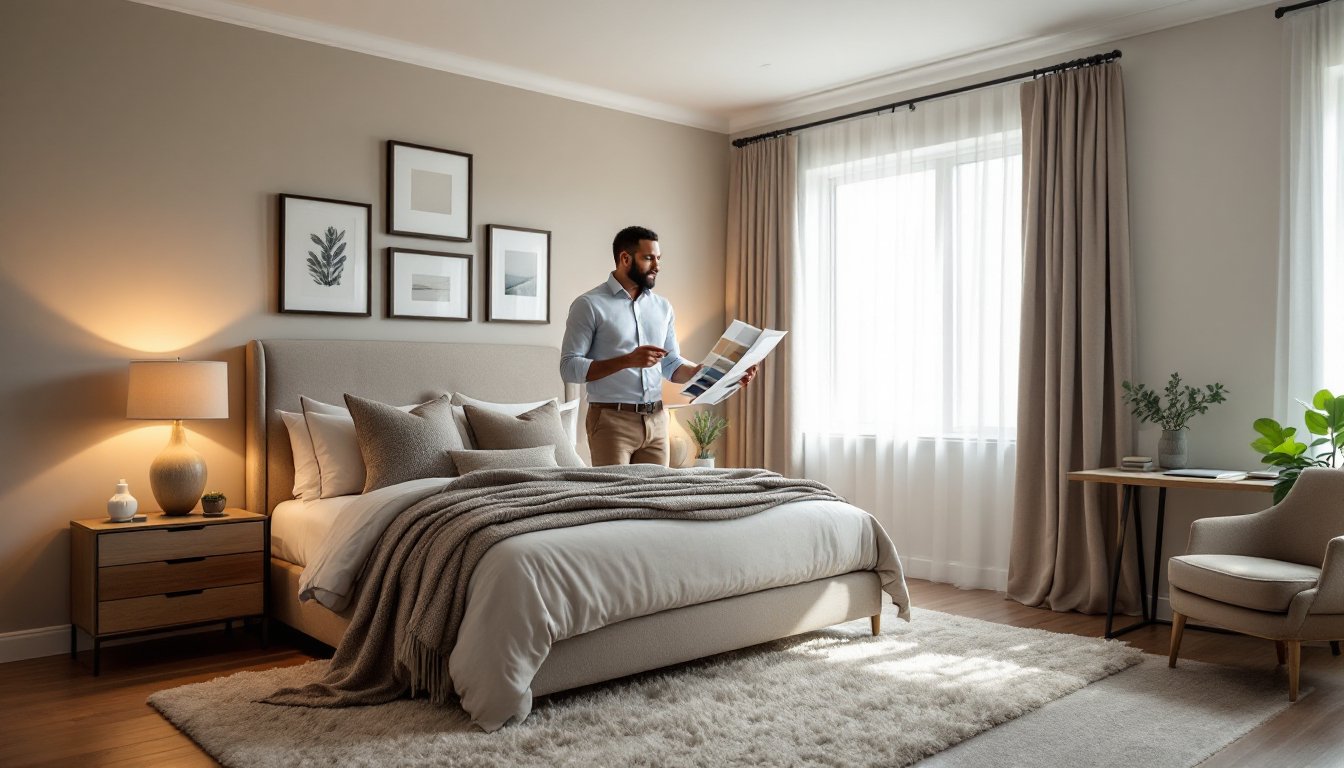
The bedroom decorator role has evolved significantly in recent years, blending practical design knowledge with hands-on execution skills. Whether you’re a homeowner looking to refresh your own space or someone considering a career in interior design, understanding what a bedroom decorator does, and how to develop the necessary expertise, opens up rewarding opportunities. This guide walks you through the essential skills, portfolio-building strategies, and design principles you’ll need to master the craft of bedroom decoration. From color theory to furniture placement, you’ll discover the tangible steps to become a skilled bedroom decorator in today’s market.
Key Takeaways
- A bedroom decorator specializes in creating functional, aesthetically pleasing sleeping spaces by focusing on consultation, space planning, material selection, and project coordination tailored to client budgets and lifestyles.
- Master essential skills including color theory, spatial awareness, practical material knowledge, client communication, and basic technical abilities—these form the foundation of professional bedroom decoration expertise.
- Build a competitive portfolio with 5-8 before-and-after bedroom projects showcasing variety in styles and budgets, complete with process documentation and brief case studies that demonstrate problem-solving approaches.
- Develop your eye and gain confidence through hands-on DIY bedroom decoration projects starting with your own spaces or friend’s rooms, focusing on wall updates, furniture arrangement, textiles, and lighting design.
- Apply core design principles—balance and proportion, focal points, layered lighting, texture and pattern mixing, and negative space—to transform bedrooms into spaces that feel both beautiful and livable.
- Stay competitive by continuously learning through design blogs, professional networks like ASID, online courses, and trade shows, while building a trend library that helps you apply emerging styles with healthy skepticism.
Understanding the Bedroom Decorator Role
A bedroom decorator specializes in creating functional, aesthetically pleasing sleeping spaces that reflect the client’s lifestyle and budget. Unlike interior designers, who typically hold formal credentials and design entire homes, bedroom decorators focus specifically on bedrooms and often work directly with homeowners on smaller-scale projects.
The role involves consultation, space planning, material selection, and project coordination. You’ll spend time listening to clients’ needs, understanding their constraints, and delivering solutions that work within their budgets. Some decorators focus purely on aesthetics: others incorporate practical elements like storage solutions and lighting schemes.
Bedroom decorators work across residential projects ranging from master bedroom updates to guest bedroom decor that balances style with practicality. The field suits people who enjoy problem-solving, have an eye for proportion, and communicate clearly with clients about expectations and timelines.
Essential Skills Every Bedroom Decorator Needs
Color Theory and Spatial Awareness
Understanding how colors interact is foundational. Warm tones (reds, oranges, yellows) energize spaces: cool tones (blues, greens, purples) promote calm, critical for bedrooms. You need to grasp how paint colors, fabric tones, and accent pieces work together, and how light (natural and artificial) changes colors throughout the day.
Spatial awareness means visualizing furniture placement before moving anything. Strong decorators mentally map traffic flow, identify focal points, and ensure proportions between furniture and room dimensions make sense. A bed shouldn’t overwhelm a small room: accent furniture should balance, not clutter.
Practical Material Knowledge
Know the difference between upholstery fabrics (durability, cleanability, cost), paint finishes (matte absorbs light: semi-gloss reflects it), and flooring options (durability for high-traffic areas). Understanding thread count in linens, wood stain types, and wallpaper durability helps you recommend products that perform as well as they look.
Client Communication
You’re translating vision into reality. This requires listening skills, asking clarifying questions, and managing expectations early. Explain why you’re recommending certain choices, “This fabric has a tight weave and resists staining, so it’s practical for a household with pets”, rather than expecting clients to simply trust your taste.
Basic Technical Skills
You don’t need to be a general contractor, but understanding measurements, scale drawings, and how to work with standard furniture dimensions is essential. Familiarity with mood boards, design software (even basic tools like Canva or Pinterest boards), and presentation methods helps you convey ideas clearly. Some decorators develop wall decor installation skills or coordinate with handypeople for hanging art and mirrors.
Building Your Bedroom Decoration Portfolio
Your portfolio is your proof of work. Start by photographing your own bedroom projects, whether that’s a complete refresh or thoughtful updates to guest bedroom decor ideas you’ve executed.
Begin with before-and-after photos of 5-8 complete bedroom projects. Include variety: a master bedroom, a guest room, a teen’s space, a budget project, and something reflecting a specific style (modern minimalist, farmhouse, eclectic, etc.). Include detail shots of focal points, the bed wall, a styled nightstand, artwork arrangement, not just wide shots of the full room.
Document the process, not just the outcome. Clients want to see how you solved problems: How did you make a small room feel larger? How did you work within a tight budget? What compromises did you navigate, and why did you make those choices?
If you’re just starting, redesign your own spaces and photograph them professionally. Good lighting makes a massive difference: shoot during daylight or use consistent artificial lighting. Write brief case studies (100-150 words) explaining the client’s needs, your solution, and the outcome. This narrative helps potential clients understand your thinking.
Host your portfolio online, a simple website with galleries and project descriptions works better than social media alone, though Instagram is a useful supplement. Include testimonials from clients and be transparent about timeline and budget for each project.
Starting Your DIY Bedroom Decoration Projects
The best way to develop your eye is through hands-on projects. Start with your own spaces or volunteer to redesign a friend’s bedroom. This builds both confidence and portfolio material.
Practical First Projects:
- Bedroom wall decor updates: Paint a feature wall, install shiplap, or create a gallery wall. These are relatively low-risk ways to experiment with visual impact.
- Furniture rearrangement and staging: Move existing pieces to optimize flow and create better focal points. You’ll learn how furniture scale affects perceived room size.
- Textile swaps: Update pillows, throws, curtains, and rugs without permanent changes. Textiles anchor a room’s color scheme and feel.
- Lighting design: Add task lighting, swap out fixtures, or introduce statement lamps. Lighting dramatically affects mood and functionality.
Research budget-friendly DIY projects for bedroom makeovers to expand your repertoire. These projects teach you constraint-based thinking, a valuable skill when working with real clients who have real budgets.
Start small with guest bedroom decor updates in homes of friends or family. Work within a defined scope and timeline. Document everything photographically. Gather honest feedback and iterate. This iterative approach builds confidence and skill faster than reading design books alone.
Key Design Principles for Stunning Bedroom Spaces
Balance and Proportion
Symmetrical balance (matching nightstands, identical lamps) feels formal and restful, ideal for bedrooms. Asymmetrical balance (varied heights, mixed textures on one side matched by visual weight on the other) feels dynamic and modern. Proportion means the scale of furniture to room size: a king bed dominates a small room: a twin looks lost in a large one.
Focal Points
Bedrooms naturally anchor around the bed, but don’t stop there. Create secondary focal points: a feature wall, a styled window treatment, an accent headboard, or bedroom wall decor like artwork or a gallery arrangement. These give the eye somewhere to rest and add visual interest.
Layered Lighting
Ambient (overhead), task (bedside reading lamps), and accent (under-bed strips, wall sconces) lighting work together. A bedroom with only one overhead fixture feels flat and institutional. Layered lighting is both functional and mood-setting.
Texture and Pattern
Mix smooth (glass, metal), soft (fabric, carpet), and rough (wood, stone) textures. Combine patterns thoughtfully: stripes with florals, geometric with organic shapes. The rule isn’t “never mix patterns”, it’s understanding scale and color harmony so patterns enhance rather than clash.
Negative Space
Don’t fill every corner. Open space makes a room feel larger and more restful. A bare wall is not a failure: it’s breathing room. This principle separates thoughtful design from cluttered spaces.
Growing Your Skills and Staying Current With Design Trends
Design trends shift annually. Colors, materials, and styles that feel fresh in 2026 will look dated by 2028. Staying current keeps your work relevant and your clients engaged.
Continuous Learning:
- Follow design blogs and accounts. MyDomaine and similar platforms publish trend forecasts, room transformations, and styling guides. Young House Love documents real budget renovations with learnable approaches.
- Join professional networks. Organizations like ASID (American Society of Interior Designers) offer continuing education and networking opportunities, even for decorators outside formal design.
- Take online courses. Platforms like Skillshare, Coursera, and specialized design schools offer classes in color theory, design software, and specific techniques.
- Attend home decor and furniture markets. Trade shows expose you to new products, emerging materials, and industry direction before trends hit mainstream.
Build a Trend Library
Collect inspiration intentionally. Create organized boards for each trend (minimalism, maximalism, cottagecore, tech-forward, etc.) with examples showing application in bedrooms. Understand why certain trends resonate, what social and cultural factors drive them?
Experimentation matters. Addicted 2 Decorating regularly tests tutorials and transformations, showing what works and what doesn’t. Approach trends with healthy skepticism: not every trend suits every client or space.
Document Your Evolution
Review your work from 2-3 years ago. You’ll notice improvement, that’s growth. Intentional skill-building beats passive inspiration-scrolling. Challenge yourself quarterly with a project using techniques you’ve not yet mastered: maybe it’s bold color, mixed metallics, or a specific style you’ve avoided.
Conclusion
Becoming a bedroom decorator combines creative vision with practical execution. Start by understanding the role’s scope, developing core skills in color, space planning, and client communication, and building a portfolio through real projects. Ground your learning in design fundamentals rather than chasing every trend, but stay curious about what’s emerging. The path isn’t linear, it evolves as your eye develops and your confidence grows. Whether you’re decorating for yourself, friends, or clients, the principles remain consistent: listen, measure, plan, and deliver spaces that feel both beautiful and lived-in.