Commercial Interior Design Essentials: Transform Your Business Space in 2026
Commercial interior design isn’t just about making a space look polished, it’s about creating an environment where your business can actually thrive. Whether you’re setting up a small office, renovating a retail shop, or redesigning commercial spaces for a growing team, thoughtful design directly impacts productivity, employee morale, and customer perception. For business owners and DIY-minded managers, understanding the fundamentals of interior design for commercial spaces means making smart choices about layout, materials, and aesthetics that won’t drain your budget or require you to hire a full-time designer. This guide covers the practical essentials you need to transform your commercial building interior design into a functional, professional space that reflects your brand and supports your bottom line.
Key Takeaways
- Commercial interior design directly impacts productivity, employee morale, and customer perception by creating functional environments that support business operations rather than personal taste.
- Layered lighting (ambient, task, and accent), strategic color palettes aligned with your brand (20–30% brand color, 50–60% neutral, 10–20% accent), and clear visual hierarchy are essential design principles for professional spaces.
- Effective layout strategy requires mapping movement patterns, defining zones without full walls, and placing high-traffic areas away from focused work zones to minimize disruptions and maximize workflow efficiency.
- Paint, lighting upgrades, and strategic furniture placement deliver the highest impact for budget-conscious projects, with transformations possible for $1,500–$4,000 using mid-range pieces and DIY finishing touches.
- Thoughtful commercial interior design solves operational problems like poor navigation and inadequate lighting without expensive architect fees, directly reducing daily productivity losses and improving client impressions.
Understanding Commercial Interior Design and Its Business Impact
Commercial interior design differs fundamentally from residential work, it’s not primarily about personal taste or comfort, but about supporting business operations and bottom-line results. A well-designed commercial space boosts employee retention, reduces fatigue, and creates an impression on clients before they ever sit down to talk business.
When you step into a cluttered, poorly lit office or a retail space with confusing navigation, you immediately notice the dysfunction. Employees dread showing up. Customers leave without buying. The good news: thoughtful design for commercial spaces solves these problems without requiring expensive architect fees or lengthy construction.
The stakes are higher in commercial work because poor decisions compound daily. A misplaced restroom forces employees to walk across an entire floor multiple times daily, wasting time and breaking focus. Inadequate lighting causes headaches and reduces productivity by measurable amounts. Weak color choices make a space feel cheap or depressing. These aren’t cosmetic failures: they’re operational drag.
Modern commercial interior design balances three core needs: functionality, brand representation, and employee or customer experience. Your space must support how work actually happens, reinforce your brand identity, and create an environment where people want to be. Start by assessing what your business genuinely needs, then build the design around those priorities, not the other way around.
Key Design Principles for Professional Spaces
Professional spaces succeed when they follow clear, tested design principles. Think of these as your project foundation, they keep decisions focused and prevent expensive mistakes.
Hierarchy and Visual Balance matter enormously in commercial spaces. Your entry should immediately communicate what happens here. A law office feels different from a creative agency by design, and that’s intentional. Use focal points (a feature wall, a reception desk, architectural details) to anchor the space and guide visitors naturally through it.
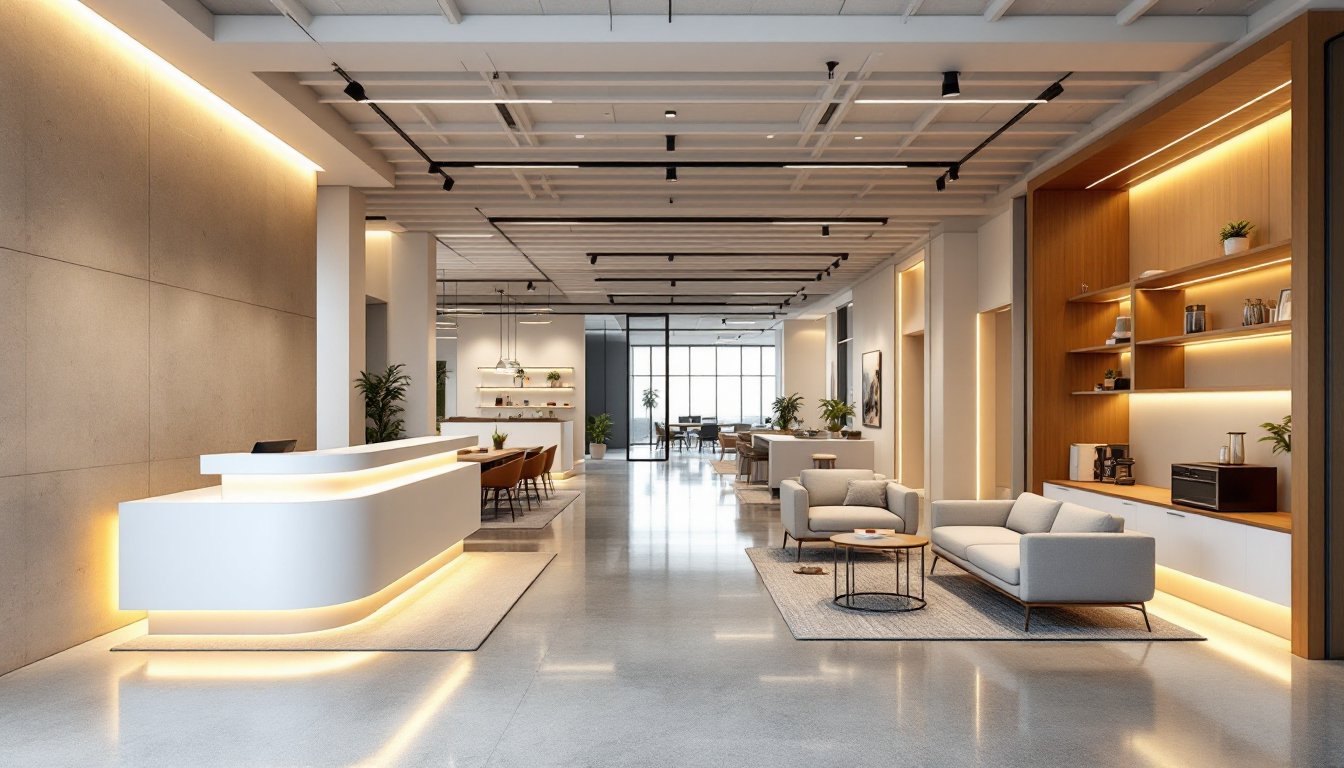
Lighting is non-negotiable. Commercial spaces require layered lighting: ambient (general illumination), task (focused on work areas), and accent (highlighting design features or products). Poor lighting makes employees squint, kills mood, and makes spaces feel dingy. If you’re upgrading existing spaces, LED panels and under-cabinet strips are budget-friendly wins that transform how a room feels.
Materiality speaks. Hard surfaces (concrete, polished concrete, tile, metal) convey industrial modernity. Warm materials (wood, felt, matte finishes) feel approachable. Your material choices should reinforce your brand message, a tech startup looks different from a counseling office, and that difference lives in the surfaces you choose.
Color Psychology and Branding Alignment
Color isn’t decoration in commercial design, it’s a tool that shapes how people feel and behave. Blues and greens calm and focus (offices, healthcare). Warm neutrals (creams, soft grays) feel professional and timeless. Brights (orange, energetic reds) spark creativity and conversation (creative agencies, startups).
Your brand colors should appear strategically, not everywhere. A coffee brand’s signature brown can anchor an accent wall or logo installation: painting the entire space in that color exhausts the eye and looks amateurish. Instead, build a palette: your brand color (20–30%), complementary neutral (50–60%), and accent shades (10–20%).
Consider your industry’s expectations, too. A financial advisory needs to feel stable and trustworthy, think soft grays, navy, natural wood. A design studio can push boundaries more, but even bold color palettes look best with a solid neutral foundation. The goal is coherence, not maximum impact. Modern commercial interior design explores how contemporary spaces balance branded identity with lasting appeal.
Practical Layout Strategies That Maximize Functionality
Layout is where design meets real work. A beautiful space that doesn’t support how people actually move through it fails every day.
Start by mapping movement patterns. Where do people enter? Where do they need to go first? Create clear pathways and avoid bottlenecks, nothing kills a space’s feel faster than congestion near the restroom or break room. Open floor plans look efficient but often create distractions: consider low-profile partitions, strategic furniture placement, or zone definition using flooring or accent walls to define spaces without closing them off entirely.
Zoning is essential in interior design for commercial spaces. A single open room handles multiple functions poorly. Use rugs, low walls, or subtle color shifts to separate reception from work areas, quiet zones from collaborative spaces. This costs far less than full walls and gives you flexibility if your business evolves.
Storage kills clutter and makes small spaces feel larger. Built-in cabinetry, shelving, and dedicated storage areas are usually worth the cost, they transform how professional a space feels and function daily.
Traffic Flow and Workspace Efficiency
Traffic flow is the difference between a space that feels calm and one that feels chaotic. Prioritize clear sightlines from major entry points, if visitors or employees immediately see the full space, they orient themselves faster and feel more comfortable.
Place high-traffic areas (restrooms, break rooms, filing) away from focused work zones. If your layout forces someone to interrupt three conversations to reach the printer, your design is working against productivity. Cluster related functions together, coffee station near seating, file storage near administrative work.
Configure furniture to minimize dead ends and forced backtracking. L-shaped or U-shaped arrangements guide movement naturally. Curved traffic patterns feel less rigid than grid layouts, though grids work well for open office settings where you want efficient use of space.
Width matters, too. Hallways should be at least 4 feet wide (36 inches minimum, but that feels cramped), ideally 5 feet to accommodate two people passing comfortably. Top Interior Design Apps can help you visualize these layouts before committing resources. Testing furniture placement with cardboard cutouts or simple floor tape takes an hour and prevents expensive repositioning later.
Budget-Friendly Design Solutions for Small Businesses
You don’t need a six-figure budget to redesign commercial spaces professionally. Strategic choices let you maximize impact on a realistic budget.
Paint and lighting are your first moves. A fresh coat of high-quality paint (quality matters, cheap paint shows) and upgraded lighting transform a tired space for $1,500–$4,000 depending on size. These changes feel disproportionately impactful because they affect every person who enters daily.
Furniture strategy matters more than luxury purchases. A few quality pieces positioned thoughtfully look better than a room packed with cheap furniture. Mid-range office furniture (IKEA, Article, Wayfair commercial lines) gives you 70% of the high-end look at a fraction of cost. Invest in pieces that get heavy use (chairs, main conference table): save on decorative furniture.
Flooring can be partially addressed without full replacement. Polishing concrete, sealing it, or adding industrial epoxy creates a modern look for $3–$8 per square foot, far cheaper than new flooring. Area rugs define zones and soften acoustics affordably. Luxury vinyl plank mimics high-end finishes at a quarter the cost.
Secondhand sources provide surprising finds. Office liquidation companies, Craigslist, and Facebook Marketplace offer quality used furniture at 40–60% off retail. One person’s office clearance is another’s treasure. Refinishing or reupholstering older pieces often costs less than new and adds character.
DIY finishing touches save thousands. Painting an accent wall yourself costs $200 instead of $800. Installing floating shelves, updating hardware, or adding plants brings life without professional fees. Mastering Interior Design Presentation Boards walks through visualizing these changes before executing them.
Vertical space is free. Wall-mounted shelving, pegboards, and tall storage units pull the eye upward, making cramped spaces feel larger and more organized. This costs far less than floor-based furniture and improves function immediately.
Prioritize based on impact: lighting and paint first, strategic furniture second, decorative touches last. A space with excellent lighting, fresh paint, and a clean layout outperforms a space with expensive furniture in a shabby setting. Real transformation comes from discipline and intentionality, not spending. Explore interior design galleries on Homify for inspiration on budget-conscious commercial spaces and see how constraints breed creativity.
Conclusion
Commercial interior design isn’t complicated, it’s about matching your space to how your business actually operates, making smart material and color choices, and executing thoughtfully. Start with layout and lighting, add cohesive color, and let strategic furniture and finishing touches complete the picture. Your space should work as hard as your team does. With these fundamentals, you can transform a mediocre commercial space into one that supports your business goals and impresses everyone who walks through the door.