French Interior Design: Timeless Elegance and Effortless Chic for Your Home
French interior design has captivated homeowners and design enthusiasts for centuries, and for good reason. It’s the art of making a home feel lived-in yet refined, comfortable yet sophisticated. Unlike trendy aesthetics that fade in a few seasons, French interior design emphasizes timeless elegance and understated luxury that actually improves with age. Whether you’re drawn to the rustic charm of Provence or the polished simplicity of Parisian apartments, French design principles translate beautifully into any home. The beauty lies in knowing which foundational elements matter most, and which shortcuts deliver the biggest impact without very costly.
Key Takeaways
- French interior design emphasizes timeless elegance and quality over quantity, ensuring your home feels refined yet lived-in without following fleeting trends.
- Balance, proportion, restraint, and authentic patina are the non-negotiable core principles of French interior design that distinguish it from mere decoration.
- A neutral color palette of soft whites, creams, and warm grays paired with natural materials like linen, solid wood, and natural stone creates the foundation for authentic French aesthetics.
- You can achieve French interior design on a budget by hunting for vintage pieces at antique shops and secondhand sources, painting walls yourself, and embracing empty wall space.
- Layered, soft lighting combined with quality natural fiber textiles—linen curtains, wool throws, and antique rugs—transforms any room into an inviting French-inspired space.
- Start with one anchor piece and one room, then edit ruthlessly and make intentional changes over time rather than attempting a complete home overhaul.
Core Principles of French Interior Design
French interior design rests on a handful of non-negotiable principles that separate authentic style from mere decoration. Balance and proportion come first. French designers obsess over scale, a large statement mirror works because the wall space warrants it, not because it looks impressive. Nothing feels forced or overdone.
Quality over quantity is another cornerstone. A French home typically contains fewer pieces than maximalist spaces, but each one earns its place. A well-made wooden chair holds value for decades, while cheap reproductions clutter without purpose. This mindset naturally extends to materials: genuine linen, solid wood, and natural stone trump their synthetic alternatives.
Restraint and editing define the aesthetic. Rather than filling every surface, French interiors embrace negative space. Empty wall sections and clear shelf space actually heighten the impact of meaningful objects. This isn’t minimalism, it’s curation. A carefully chosen artwork, a vintage bookshelf, or an antique console becomes a focal point precisely because the room breathes around it.
Patina and history matter. French design celebrates objects with character, worn paint, visible wood grain, aged brass hardware. Newness is fine, but age and authenticity are preferred. This is why French homes often feel both timeless and lived-in, never sterile or showroom-ready.
These principles apply whether you’re renovating a single room or an entire home. Start by evaluating what’s already there: which pieces have soul? What’s genuinely useful? What can go? That editing process is the most French thing you can do.
The Classic French Color Palette and Materials
French color schemes favor neutrals with confidence, not timidity. Soft whites, warm creams, pale grays, and gentle beiges form the foundation in nearly every classic French interior. These aren’t bland, they’re nuanced. Cream with a hint of yellow reads warmer than pure white: warm gray with undertones of taupe feels more inviting than cold gray-blue.
Accent colors appear, but sparingly. Navy, forest green, terracotta, and muted gold add sophistication without competing for attention. Think of a navy chair against cream walls, or a sage-painted bookcase in an otherwise neutral room. Jewel tones exist in French interiors, but they’re restrained and usually appear in small doses, a pillow, a painted shutter, artwork details.
Material choices lean heavily on natural, authentic options. Hardwood floors (often oak, walnut, or reclaimed timber) are standard: they’re left somewhat visible rather than carpeted wall-to-wall. Stone surfaces, limestone, marble, or slate, appear in kitchens and bathrooms. Plaster walls with visible texture replace drywall whenever possible: they age beautifully and reflect light differently than smooth finishes.
Fabrics emphasize natural fibers: linen, cotton, wool, and silk. These breathe, fade gracefully, and improve with use. Synthetic fabrics rarely appear in authentic French spaces, they cheapen the overall effect and don’t age well. Similarly, brass, iron, and bronze hardware and fixtures replace chrome or plastic alternatives.
When selecting paint, primer, or stain for your own projects, research historically accurate French finishes. Old plaster techniques and soft-sheen paints differ from modern matte finishes. The investment in authentic materials pays dividends in longevity and aesthetic coherence.
Creating Parisian Elegance on a Budget
You don’t need a six-figure budget to achieve French interior design. The approach is about smart choices and patience, not spending power.
Start with one anchor piece. A beautiful wooden table, a statement mirror, or an ornate chandelier becomes the room’s foundation. Hunt for these at antique shops, estate sales, or secondhand sources online. Authentic aged pieces cost far less than new reproductions trying to look vintage.
Paint walls yourself. This single change transforms a space dramatically. Choose soft whites, creams, or warm grays in a matte or eggshell finish (glossy finishes feel un-French). One quality gallon of paint covers roughly 400 square feet, so budget accordingly. Prep work, patching holes, sanding glossy surfaces, priming stains, determines success more than the paint brand itself.
Source textiles strategically. Bed linens, curtains, and upholstery in linen or cotton feel authentic without costing premium designer prices. White or cream linens pair with any color scheme and age beautifully. Thrift stores and online marketplaces yield surprising finds, linen curtains for a fraction of retail cost.
Embrace empty walls. Rather than filling space with inexpensive prints, leave walls mostly bare or add a single meaningful piece. This costs nothing and follows French design principles perfectly. When you do add art, frame quality matters: simple wood or painted frames look more authentic than plastic.
Refurbish existing furniture. Sanding and repainting a worn dresser, re-staining a bookcase, or reupholstering a chair yourself (or with a local upholsterer) breathes new life into pieces for less than replacement cost. Tutorial resources make these projects accessible even for DIY beginners.
Do not assume French design requires luxury pricing. Many of the most charming French homes feature thrifted and refurbished pieces alongside inherited family furniture. Authenticity and care matter infinitely more than labels or newness.
French Furniture and Decor Essentials
Certain furniture pieces anchor French interiors across regions and periods. Recognizing these essentials helps guide your own selections.
Wooden tables dominate French spaces, dining tables are substantial and often show wood grain: side tables are slender and elegant. Look for pieces with turned legs or simple, clean lines rather than ornate carved details (that edges into Victorian territory).
Upholstered seating appears in soft, neutral fabrics. A classic bergère chair (a framed wooden chair with upholstered seat and back) is iconic: reproductions exist at various price points. Sofas tend toward simple silhouettes in cream linen rather than complex modern shapes.
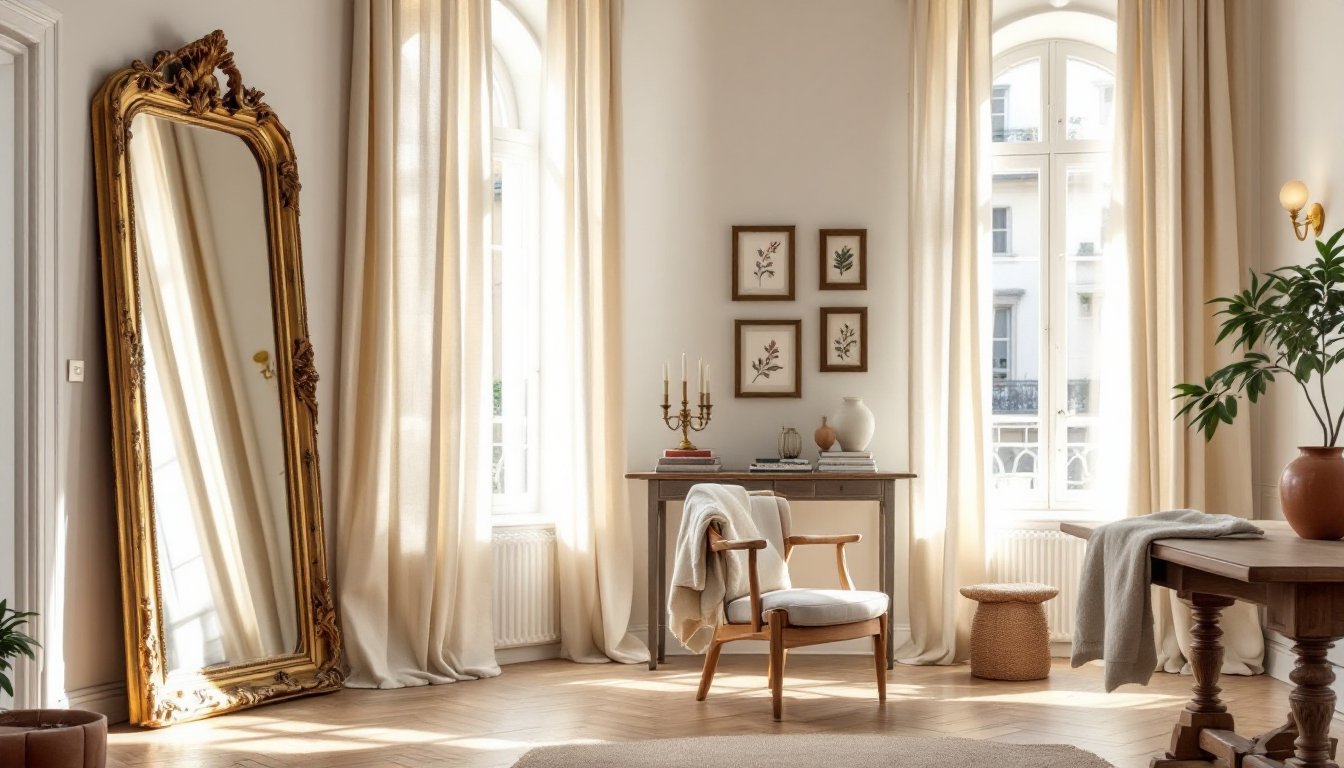
Mirrors with ornate frames, gilded wood, painted frames, or distressed finishes, are nearly universal in French design. They reflect light and create visual depth while adding character. A large mirror leaning against a wall feels more authentic than a centered, perfectly hung installation.
Bookcases and shelving display books, ceramics, and objects naturally. Open shelving (or glass-front doors) shows off collections without being precious. Arrange objects in clusters rather than spreading them evenly, grouping creates visual interest.
Artwork typically includes landscapes, still lifes, or botanical prints in simple frames. Black and white photography, watercolors, and vintage engravings fit the aesthetic. Quality of the frame matters as much as the print itself.
Lighting fixtures favor brass, bronze, or wrought iron in classic designs. Crystal chandeliers appear in formal spaces: wall sconces with simple shades work everywhere. Modern track lighting or spotlight fixtures look out of place.
When shopping, prioritize solid construction and timeless silhouettes over trendy shapes. A well-made wooden chair will outlast fast furniture by decades and fits French design perfectly. Check top interior design options if you need help visualizing pieces before purchasing.
Lighting and Textiles: The Finishing Touches
Lighting and textiles determine whether a room feels cold or inviting, rushed or thoughtful.
Lighting should be layered and soft. Avoid harsh overhead fixtures: instead, combine table lamps, wall sconces, and candlelight. Warm-toned bulbs (2700K color temperature) mimic candlelight better than cool white. Lampshades in cream, linen, or parchment diffuse light beautifully. If overhead lighting is necessary, a chandelier or flush-mount fixture in brass or bronze with frosted or cream shades softens the effect.
Textiles add warmth and texture. Linen curtains (often white, cream, or natural undyed) hang simply, gathered at the top with minimal fussing. Linen is traditional for a reason: it fades unevenly in a way that reads as authentic aging. Wool or linen throws draped over furniture add comfort without clashing. Cushion covers in natural fibers ground a seating area.
Rugs anchor spaces. Natural fiber rugs, sisal, jute, or wool, work beautifully in neutral palettes. Antique or vintage rugs add history. Avoid bright, busy patterns: subtle geometry or solid colors work better.
Curtain hardware matters. Simple brass rods, wrought iron fixtures, or painted wooden poles feel right. Ornate finials can work, but simplicity usually wins. Hang curtains high and long, pooling slightly at the floor looks intentional and elegant.
If you’re refinishing a room, tackle lighting first. Once you understand how light moves through the space, furniture and textile placement become intuitive. Textiles come last, they’re the easiest to swap if color or fabric isn’t working.
Bringing French Interior Design Into Your Home
Implementing French interior design doesn’t require a complete overhaul. Small, intentional changes compound into a cohesive aesthetic.
Begin with one room. A bedroom or dining room is ideal, lower traffic means fewer competing elements. Edit ruthlessly: remove items that don’t serve a purpose or bring joy. Clear surfaces. Paint walls if they’re dated or bright. Add or refurbish a centerpiece furniture piece.
Introduce natural materials gradually. Swap synthetic fabrics for linen or cotton. Replace chrome hardware with brass or iron. These swaps happen over time as budget allows, there’s no urgency.
Hunt for vintage and antique pieces. Flea markets, estate sales, and online secondhand sites yield authentic objects with patina already built in. This approach costs less than new furniture designed to look old.
Reconsider your relationship with accessories. Instead of cramming shelves with trinkets, display fewer items more intentionally. A single beautiful bowl on a shelf reads louder than ten small objects crowded together.
Study reference interiors. Publications like Architectural Digest showcase French homes and design principles regularly. MyDomaine offers accessible styling tips. These visual references clarify which choices feel right.
You’ll also find value in exploring interior design archives on lesssea.com for broader context on how French design contrasts with other aesthetics. Understanding related styles, like Southwest interior design or Southern interior design, sharpens your own design eye.
French interior design rewards patience and intentionality. You won’t transform a home overnight, but the process of editing, selecting, and refining is deeply satisfying. Each thoughtful choice builds toward spaces that feel authentically yours and genuinely inviting, the hallmark of French design done well.
Conclusion
French interior design endures because it prioritizes quality, restraint, and authenticity over trends or expense. The principles, balance, natural materials, careful curation, and respect for patina, apply universally. Start small, think long-term, and trust that fewer, better-chosen pieces create far more impact than rooms packed with purchases. Your home will feel more refined, more livable, and genuinely beautiful as a result.