Living Area Decor Ideas: Transform Your Space Into a Stylish Sanctuary in 2026
Your living area is the heart of your home, where family gathers, guests are welcomed, and you unwind after a long day. Creating a well-designed living space doesn’t require a designer’s budget or advanced DIY skills. Whether you’re working with a sprawling family room or a modest apartment, smart living area decor ideas can transform any layout into a stylish, functional sanctuary. This guide walks you through the essential steps to define your style, choose colors that work for you, arrange furniture strategically, layer lighting effectively, and add personality through thoughtful details. By the end, you’ll have a clear roadmap for refreshing your living room in a way that feels both cohesive and uniquely yours.
Key Takeaways
- Define your design style by collecting reference images and clarifying your room’s primary function—whether it’s entertainment, reading, hosting, or family gathering—to guide every decorating decision.
- Use the 60–30–10 color rule to create balanced living area decor: 60% dominant color, 30% secondary, and 10% accent colors for a cohesive palette that works with your chosen style.
- Anchor your furniture layout with a sofa or sectional facing your main focal point, maintain at least 30–36 inches of circulation space, and position rugs to ground seating zones for maximum impact.
- Layer three types of lighting—ambient, task, and accent—with dimmer switches and warm white bulbs (2700K) to create flexible ambiance that supports relaxation and different activities.
- Establish a dominant focal point like a fireplace, media wall, or large artwork, then use symmetrical or asymmetrical balance with wall decor, mirrors, and galleries to anchor the room’s visual direction.
- Mix contrasting textures—soft materials like velvet and wool paired with hard elements like wood and metal—and display meaningful accessories in odd numbers to add personality without clutter.
Define Your Design Style and Vision
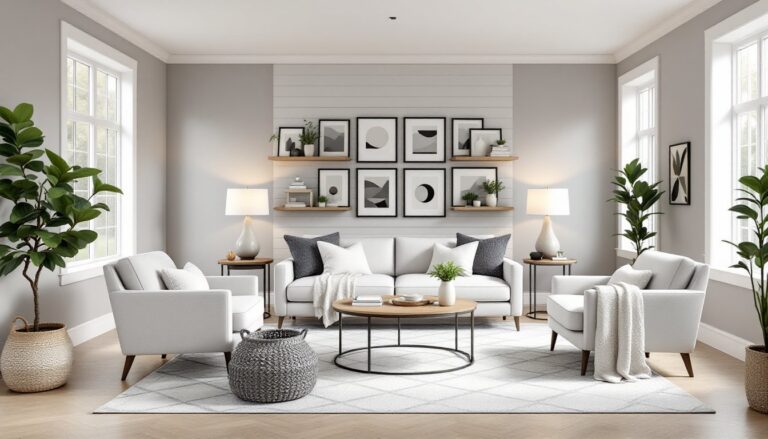
Before you buy a single throw pillow or move furniture around, identify the design style that speaks to you. Are you drawn to the clean lines of minimalism, the warmth of farmhouse, the industrial edge of exposed brick and metal, or perhaps the cozy minimalism of Scandinavian design? Maybe you prefer traditional elegance, rustic charm, eclectic mashups, or mid-century modern pieces. Your style becomes the anchor for every decision that follows.
Start by collecting 5–10 reference images from resources like Houzz, design books, or interior magazines. Look for recurring patterns: What shapes and materials appear across your favorites? Are surfaces mostly smooth or textured? Light or dark? Does the vibe feel cozy, minimal, bold, or serene? Pin these images in a folder or on a board.
Next, clarify your room’s primary function. Is this a TV-focused entertainment zone, a reading retreat, a space for hosting dinner parties, or a multiuse family gathering spot? This decision shapes furniture scale, traffic flow, and storage needs. A TV-centric layout differs from one built around conversation and natural light. Knowing your purpose keeps you from overbuying or arranging pieces that don’t serve your actual life.
Color Palettes That Set the Right Mood
Color is one of the most powerful tools in living area decor. The right palette sets the emotional tone before anyone sits down.
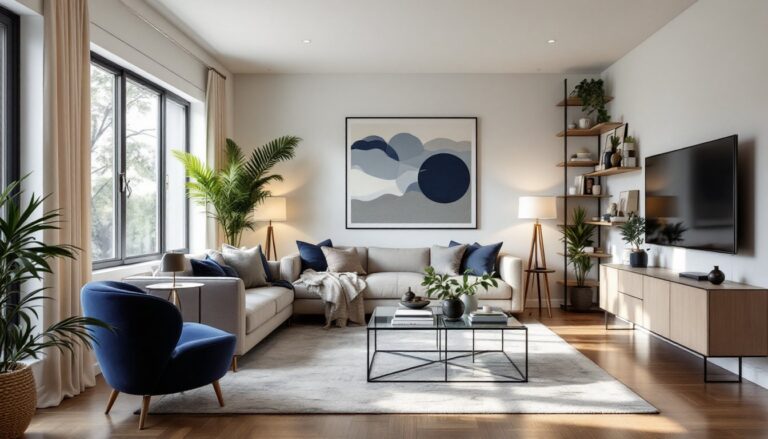
Neutral foundations (white, beige, gray, greige) work for nearly every style. They’re calm, versatile, and let you change accents without a full repaint. Warm neutrals pair well with rustic, farmhouse, and Southwestern aesthetics. Cool grays align better with modern or Scandinavian spaces.
Warm color palettes, terracotta, rust, warm taupe, or golden ochre, create instant coziness. These suit farmhouse, eclectic, and Southwestern living area decor ideas especially well. Cool palettes (soft blues, sage greens, cool grays) feel relaxing and work beautifully in beach, Scandinavian, or contemporary settings.
High-contrast schemes (dark walls paired with light furnishings, or vice versa) deliver drama and work in modern and traditional rooms alike. But, they can feel heavy if overused in smaller spaces.
Use the classic 60–30–10 rule: Choose a dominant color for 60% of the room (walls, large upholstery), a secondary color for 30% (accent walls, larger decor pieces), and a 10% accent color for pillows, artwork, or small accessories. This creates balance without feeling chaotic. Test paint samples on your wall in natural and artificial light before committing: colors shift dramatically depending on time of day and bulb type.
Furniture Arrangement for Maximum Impact
Furniture placement is less about aesthetics and more about function and flow. A poorly arranged living space feels awkward no matter how beautiful the pieces are.
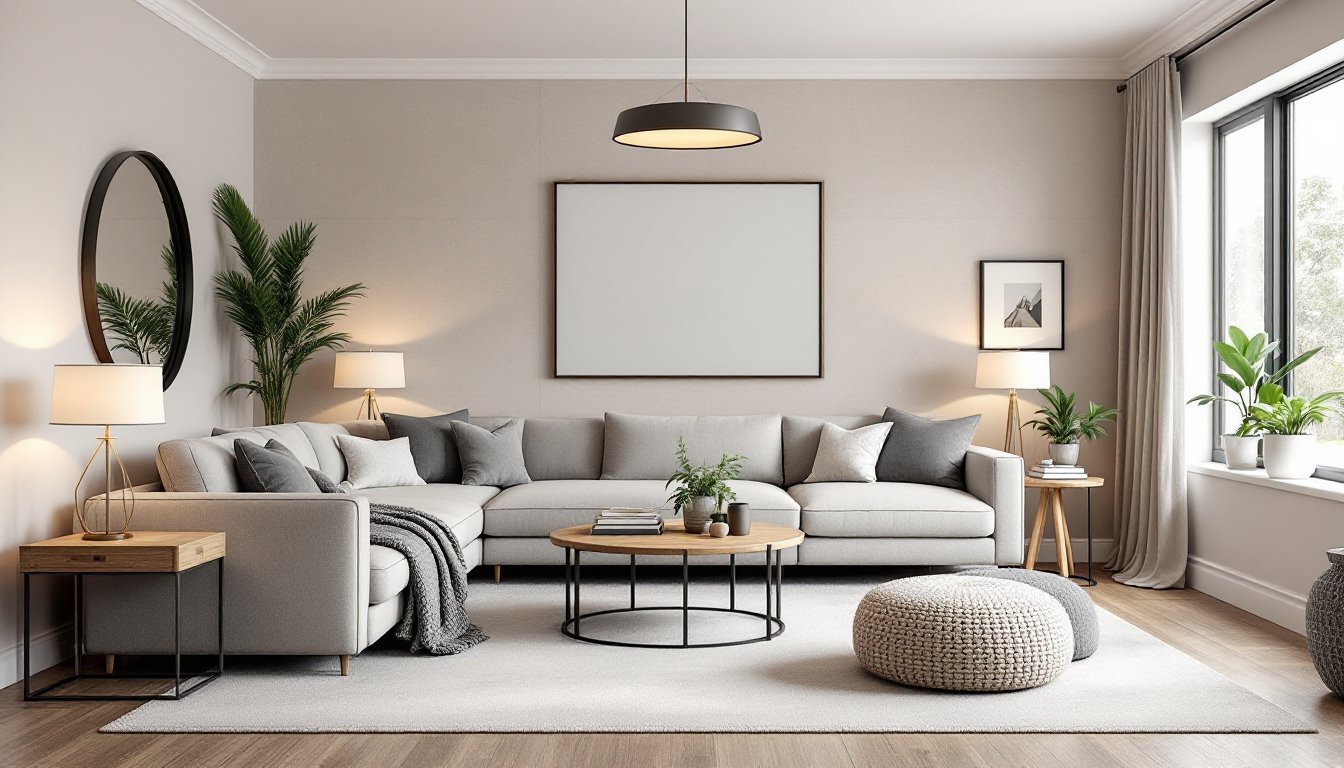
Anchor your layout with a sofa or sectional facing your main focal point, typically a fireplace, media wall, large window, or statement artwork. This anchoring piece sets the entire room’s direction. Position a coffee table 14–18 inches (35–45 cm) in front of your seating: it should be roughly half to two-thirds the length of your sofa. Too close and it crowds the space: too far and it feels disconnected.
Maintain clear pathways through the room. Aim for at least 30–36 inches (75–90 cm) of circulation space, enough for someone to walk comfortably without squeezing past furniture. In smaller rooms, this constraint is real: measure twice and arrange loosely before committing to a layout.
Rugs define and anchor seating zones. Ideally, use an 8×10 or 9×12 foot rug: place all four legs of major furniture pieces on it for cohesion, or at minimum have the front legs touching the rug edge. If your rug is smaller, a floating arrangement (furniture not touching the rug) can still work, but it requires confident styling. Avoid undersized rugs, they make rooms feel choppy and disconnected. Consider how smart styling for compact living spaces applies even in standard-sized rooms: right-sizing your rug and furniture scale prevents the “too much in too little” feel.
Lighting Layers That Enhance Ambiance
Great lighting doesn’t just happen, it’s built in layers. A single overhead fixture creates harsh shadows and kills ambiance. Three types of lighting work together to transform a room.
Ambient lighting provides general illumination: ceiling fixtures, recessed lights, or large pendant lights. This is your baseline brightness. Task lighting supports specific activities, floor lamps next to reading chairs, desk lamps for work areas, or table lamps flanking your sofa for game nights. Accent lighting adds drama and depth: wall sconces flanking a mirror, picture lights above artwork, or subtle LED strips along shelving.
Layering these three types lets you adjust mood and brightness for different times and activities. Dimmer switches are your best friend: they let you dial down ambient light for movie nights or amp up task lighting for reading.
Choose warm white bulbs (around 2700K color temperature) for living spaces. This warm tone supports relaxation and conversation without the sterile feel of cooler, brighter bulbs (5000K+). LED bulbs are now affordable and efficient: a quality 60-watt-equivalent LED costs a few dollars and lasts years. Placing lamps at varying heights, one tall floor lamp, one table lamp at seat height, wall sconces at eye level, prevents the cave-like flatness of overhead-only lighting.
Wall Decor and Focal Points
Every strong living area has a dominant focal point that anchors the eye. Without one, a room feels scattered and lacks visual direction.
Your focal point might be a fireplace (classic and powerful), a media wall (practical for TV-focused layouts), a large piece of artwork (dramatic and flexible), a feature wall in bold color or texture (wallpaper, shiplap, or stone veneer), or even a stunning window with natural light. Choose one and build around it using symmetry or balanced asymmetry. Symmetrical arrangements (matching lamps on either side of a fireplace, identical sconces flanking a mirror) feel formal and controlled. Asymmetrical balance (different-sized pieces arranged to feel intentional, not random) suits eclectic and modern spaces.
Gallery walls, large mirrors, and textured finishes add depth and personality. A gallery wall works best with 5–7 pieces hung as a unified group: too many scattered pieces look cluttered. Mirrors amplify light and visually expand a room, a large mirror opposite a window bounces natural light throughout. Textured treatments like paneling, wallpaper, or stone veneer add tactile richness that flat paint alone can’t deliver. When adding wall decor, leave breathing room: a wall packed edge-to-edge feels visually exhausting. Interior design resources like MyDomaine showcase how intentional focal points and wall styling elevate even modest rooms.
Textures and Accessories for Personality
A beautifully arranged room with solid color walls and smooth upholstery can feel sterile. Textures bring warmth, depth, and personality.
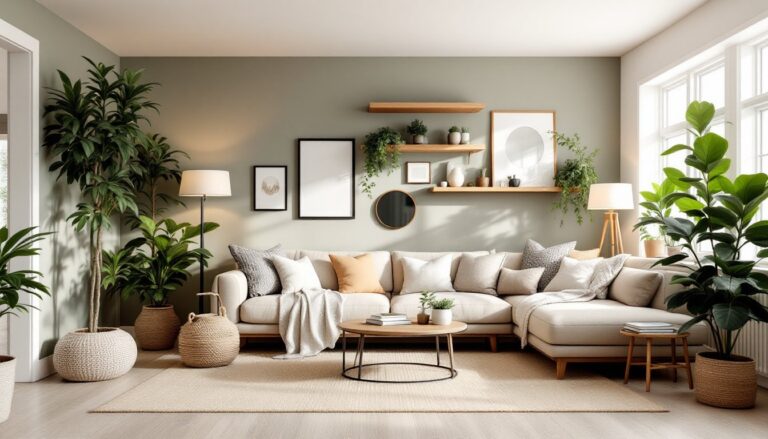
Layer contrasting materials: soft textures (velvet upholstery, cotton throws, wool area rugs, shag cushions) paired with hard materials (wooden side tables, metal light fixtures, glass vases, stone accents). This mix keeps a room from feeling one-note. A sleek leather sofa pairs beautifully with a chunky knit throw and wooden shelving.
Accessories tell your story. Display books, travel mementos, framed photos, and plants, items that reflect your actual life, not a magazine spread. Plants aren’t just decor: they improve air quality and add living texture. A few well-chosen pieces feel curated: a room crammed with trinkets feels cluttered. Leave functional space on coffee and side tables for coasters, remotes, and drinks. Avoid the temptation to fill every surface.
When styling shelves or tables, follow the rule of three: group items in odd numbers and vary heights and textures. One tall object, one medium, one small creates visual interest. Mix vertical (books stacked upright) and horizontal (a folded throw draped over a chair arm) elements. Resources like Apartment Therapy offer smart ideas for styling on a budget. For restroom ideas decor or bedroom decor that carries similar principles, the texture-and-accessory approach applies equally well, it’s not exclusive to living rooms.
Conclusion
Creating a polished, personalized living area doesn’t require an overhaul or a professional designer. By defining your style, choosing a cohesive color palette, arranging furniture with purpose, layering lighting thoughtfully, establishing a clear focal point, and adding textures and meaningful accessories, you’ll build a space that’s both beautiful and genuinely livable. Start with one or two changes, maybe a rug and better lighting, rather than trying to transform everything at once. Small, intentional improvements compound into a room you’ll actually want to spend time in. Your living area decor is an ongoing conversation with your space, so refine it over time as your tastes and life evolve. Transform your basement into a stunning living space or refresh existing areas: the principles remain the same.