Log Home Interior Design: Creating Warmth and Character in 2026
Log homes have a distinctive charm that’s hard to replicate in conventional construction. The beauty lies not just in the logs themselves, but in how you design the interior to complement and enhance their natural presence. Whether you’ve inherited a rustic cabin, renovated an existing log home, or built new, the design challenge is the same: balance the logs’ commanding presence with modern comfort and livability. This guide walks you through practical strategies for log home interior design that honor the home’s character while making it genuinely usable for contemporary living. You’ll learn how to layer textures, choose colors that don’t compete, incorporate modern amenities without jarring contrasts, and create spaces that feel both timeless and current.
Key Takeaways
- Log homes interior design succeeds when you layer natural materials like stone, reclaimed wood, and natural fibers to complement rather than compete with the logs’ visual presence.
- Strategic lighting through larger windows, skylights, and open floor plans prevents log homes from feeling dark or cramped while maintaining their distinctive character.
- A restrained color palette of neutrals—cream, soft grey, and warm white—anchors the space, while accent colors work best in textiles and furnishings rather than on large walls.
- Furniture selection should feature solid wood pieces, leather, and substantial frames that echo the home’s proportions; contemporary designs in natural materials pair beautifully with rustic architecture.
- Modern amenities like matte-black appliances, bronze fixtures, and concealed HVAC integrate seamlessly into log home interiors without compromising their timeless aesthetic.
- Layering high-quality textiles—area rugs, linen curtains, throws, and pillows in cohesive colors—transforms hard log surfaces into warm, livable spaces that feel both established and genuinely comfortable.
Embracing Natural Materials and Textures
The logs are your foundation, everything else should work alongside, not against them. Start by accepting the logs’ visual weight and the warm tones they bring. Stone, reclaimed wood, and natural fibers are your allies here.
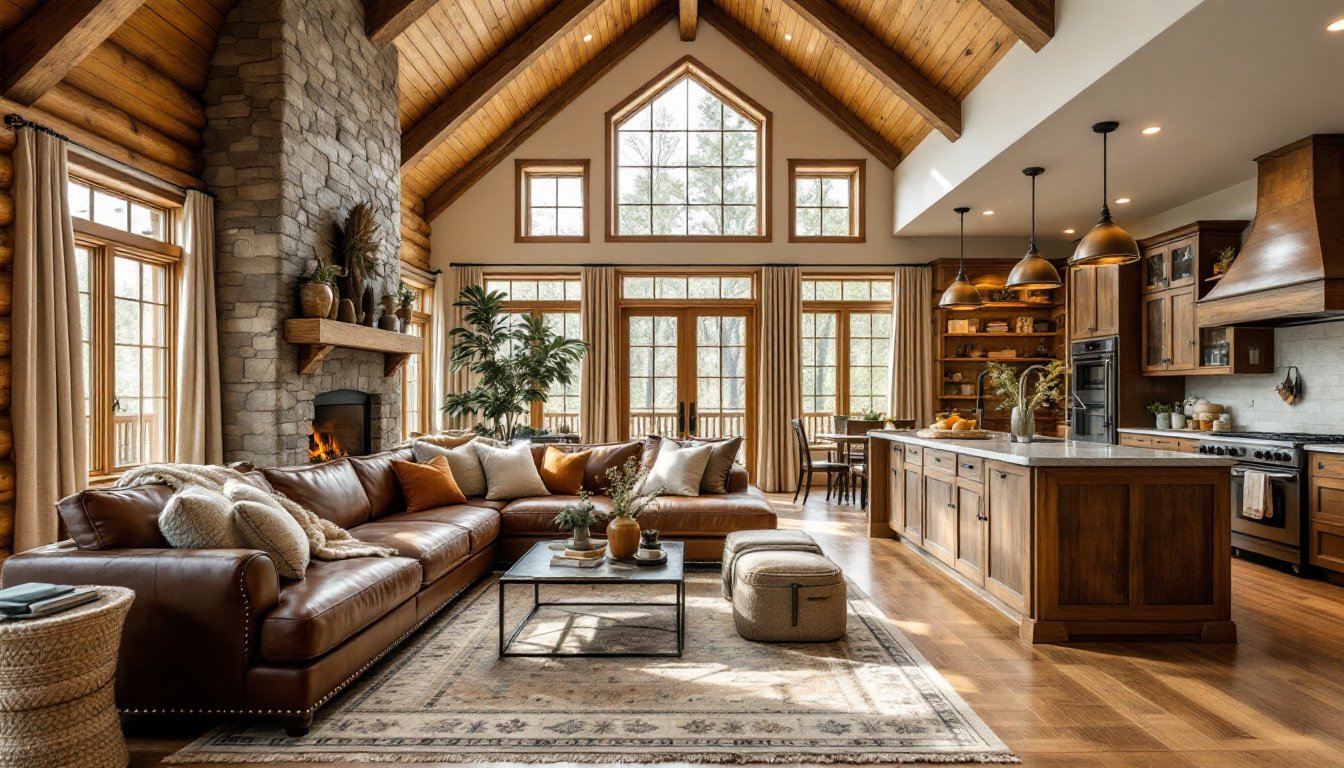
Consider a stone fireplace breast that rises through the main living area. Real stone or a high-quality veneer that mimics local quarry products grounds the space and prevents the interior from feeling one-note. Similarly, exposed timber beams (whether original or added for visual interest) create rhythm across ceilings without clashing with wall logs.
Floor materials matter significantly. Concrete stains in muted earth tones, wide-plank hardwood, or natural stone tile all complement log walls without competing for attention. Avoid glossy finishes, they bounce light in ways that feel at odds with the home’s organic character. Matte or hand-scraped surfaces feel more honest.
Natural fiber rugs, jute runners, and wool accents layer warmth underfoot and soften hard floor surfaces. These materials also age gracefully, picking up the patina that makes log homes feel established rather than brand-new. Linen, hemp, and untreated leather add tactile depth that synthetic fabrics simply can’t match. The key is restraint, too many competing textures create visual noise rather than richness.
Maximizing Light and Open Spaces
Log homes can feel dark if you’re not intentional about light. The logs absorb it, and smaller windows typical of older construction can leave interiors cave-like. Modern log home design typically incorporates larger windows and open floor plans, both improvements worth pursuing if your layout allows.
Strategically place windows and skylights to flood the main living areas. South-facing glass draws passive heat in winter (a genuine benefit in log homes with substantial thermal mass), while skylights in the great room or upper-story bedrooms feel less intrusive than additional wall windows. If structural changes aren’t feasible, interior skylights or light tubes can brighten darker passages without disrupting exterior aesthetics.
Open floor plans reduce the sense of compartmentalization that makes log homes feel small. If you’re planning a renovation, removing non-load-bearing interior walls (verify with a structural engineer first) and creating sight lines from kitchen through living areas adds spaciousness. Half-walls or open railings maintain visual separation without blocking light or creating boxed-in feelings.
Varnish selection affects light bounce considerably. A modern satin or matte finish on log walls reflects less light than high-gloss but still allows some brightness to diffuse. This is where professional guidance on finishing options during renovation planning prevents costly mistakes. Pale, warm wall colors in dining or bedroom areas don’t fight the logs, they whisper rather than shout.
Color Palettes That Complement Log Walls
Log walls don’t leave much room for chromatic adventuring. Your palette should revolve around the logs’ natural color (honey, amber, deep brown, or grey-toned) and expand outward from there with restraint.
Neutrals are your safest anchor. Cream, soft grey, taupe, and warm white work on interior walls, trim, and ceilings without creating jarring contrasts. Avoid stark white, it makes logs look brown-on-brown, which feels heavy. A slightly warmed cream or grey-white (think interior-wall primer colors) feels intentional rather than accidental.
Accent colors work best in textiles and furnishings rather than on large wall surfaces. Burnt orange, deep teal, or forest green appear in throw pillows, artwork, and smaller pieces where they add visual interest without overwhelming the space. A single accent wall painted in a muted jewel tone, perhaps behind the bed or behind a kitchen island, can define a zone without fighting the logs. Test samples large enough to see in different lighting before committing.
External finishes on the logs themselves matter too. Designer cabin decorating ideas often showcase how log stain color (honey, natural, or grey-wash) shifts the entire room’s feeling. If you’re refinishing or staining logs, lighter tones open a space: darker tones ground it and require brighter accents to prevent gloom.
Furniture Selection for Log Home Aesthetics
Furniture in a log home should echo the materials and proportions around it. Solid wood pieces, leather, linen upholstery, and substantial frame sizes, feel congruent. Spindly metal or glass furniture looks orphaned in a log interior. A leather sectional with nailhead trim, a solid walnut dining table, and wood-frame chairs feel cohesive with the architecture. That doesn’t mean rustic kitsch: contemporary furniture in natural materials works beautifully alongside logs. Clean lines in oak or walnut, subtle upholstery, and mid-century modern pieces that rely on wood and genuine materials all pair well.
Scale matters enormously. Log homes often have dramatic ceiling heights and substantial wall surfaces. Furniture that’s too delicate gets lost. A low coffee table looks fragile against 12-foot vaulted ceilings. Instead, opt for substantial pieces that anchor seating areas. A chunky upholstered ottoman or a thick hardwood credenza holds its own visually. Area rugs beneath seating groups further define spaces without overwhelming them.
Modern Amenities With Rustic Appeal
The tension in log home design today is integrating modern utilities without making the interior feel contemporary-suburban. Your HVAC, electrical, plumbing, and kitchen appliances don’t have to scream “updated in 2024.”
Kitchen equipment offers the biggest visibility. Stainless steel appliances read modern but can feel cold against logs. Matte-black or bronze finishes integrate more subtly. A custom hood with wood or stacked stone detailing looks purpose-built rather than dropped in. Open shelving in kitchens works if kept organized, rustic doesn’t mean chaotic. Glass-front cabinets or simple wood shelving display everyday items (dishes, glassware, cookbooks) without the industrial vibe of fully open shelves.
Lighting fixtures are another integration point. Industrial-style pendant lights over islands can work if their scale is right, but oversized Edison bulbs and oversized fixtures often feel like self-conscious “rustic” theater. Instead, choose fixtures with wood elements, fabric shades, or bronze/oil-rubbed finishes that feel less aggressively trendy. Recessed lighting for task areas keeps sightlines clean without visible fixtures cluttering the ceiling.
Electrical outlets and switches shouldn’t be invisible, but they shouldn’t announce themselves. Brass or oil-rubbed bronze plate covers age more gracefully and feel more intentional than white plastic. HVAC returns and ductwork are best concealed behind soffits or integrated into the design from the start. A home transformation at Michigan’s renovation headquarters often involves these details before walls close, plan ahead with your contractor.
Layering Textiles for Comfort and Style
Logs are beautiful but unforgiving. A room with only hard surfaces and logs feels cold and echoey. Textiles, rugs, curtains, throws, pillows, soften and warm the space while controlling acoustics.
Window treatments should honor the logs rather than compete. Heavy linen curtains in cream or soft grey frame views without adding visual noise. Motorized cellular shades in muted tones disappear when open and provide insulation without fussy hardware. Avoid chintz or heavily patterned fabrics that fight the logs’ visual presence.
Layering begins with a substantial area rug anchoring seating. A natural fiber base (jute, sisal, or wool) topped with a flatter kilim or vintage pattern adds visual interest without feeling trendy. Layer in throws draped over seating, chunky knit, linen, or wool. Pillows in varying textures (linen, leather, wool, linen-cotton blends) but a cohesive color story build depth. Solid colors with subtle texture variations read more sophisticated than a patchwork of prints.
Bedrooms benefit from high-quality linens that actually improve with age. Linen sheets wrinkle naturally, fitting the home’s aesthetic. Layering a quilt, throw blanket, and accent pillows creates that lived-in coziness log homes promise. Avoid overly coordinated “bedroom sets”, they look contrived. Instead, choose pieces individually, ensuring they work in the home’s overall color and material story.
For living areas, upholstery choices anchor everything. A solid linen or wool sofa, leather side chairs, and wool poufs for seating create a tactile, coordinated look without matching. Add woven baskets for blanket storage, fabric wall hangings, or a wool throw blanket casually draped over a rocking chair. These elements transform logs-and-stone into a genuinely livable home. Practical inspiration comes from regional design approaches that balance aesthetic with everyday functionality.
Conclusion
Log home interior design isn’t about covering up the logs or pretending they’re not there, it’s about creating a complete environment where they’re the star and everything else plays a supporting role. Thoughtful material choices, restrained color palettes, strategic textiles, and intentional modern integration transform a structure into a home. The work happens in the details: in stain choices, in fixture finishes, in the texture of a rug, in how light moves through the space. Start with the bones, your logs, stone, and structure, and layer everything else to enhance rather than mask them. The result is a space that feels timeless, warm, and genuinely yours.