13 Bedroom Interior Ideas to Transform Your Space in 2026
Your bedroom should be your sanctuary, a place where you can rest, recharge, and disconnect from the chaos outside. But too often, bedrooms end up as afterthoughts: a bed shoved in a corner, generic wall color, and whatever furniture fits through the door. The good news? Bedroom interior ideas don’t have to be expensive or complicated. Whether you’re working with a tiny apartment or a sprawling master suite, the right combination of color, lighting, layout, and textiles can transform your space into something that feels both intentional and deeply comfortable. This guide walks you through 13 practical bedroom interior design strategies that work for any budget and style preference. From choosing colors that actually help you sleep better to arranging furniture for both function and flow, you’ll find actionable solutions you can start implementing this weekend.
Key Takeaways
- Cool tones like soft blues and muted greens naturally promote better sleep, while warm neutrals create a cozy atmosphere without overwhelming the space.
- Three-layer bedroom lighting—ambient, task, and accent—combined with dimmer switches and warm-bulb fixtures (2700K) transforms harsh overhead lights into a relaxing environment.
- Strategic bedroom interior design prioritizes functional furniture layout with your bed as the focal point, allowing at least 18 inches of walking space and avoiding oversized pieces that crowd tight spaces.
- Real, accessible storage solutions like under-bed bins, floating shelves, and closet organization are far more effective than decorative boxes for reducing clutter and supporting restful sleep.
- Quality textiles, including high thread-count sheets and blackout curtains, directly impact both comfort and sleep quality more than any single design element.
- Intentional wall treatments—from a single large artwork to an accent wall with subtle patterns—complete the bedroom interior design without requiring expensive renovations or professional design services.
Color Palettes That Promote Rest and Relaxation
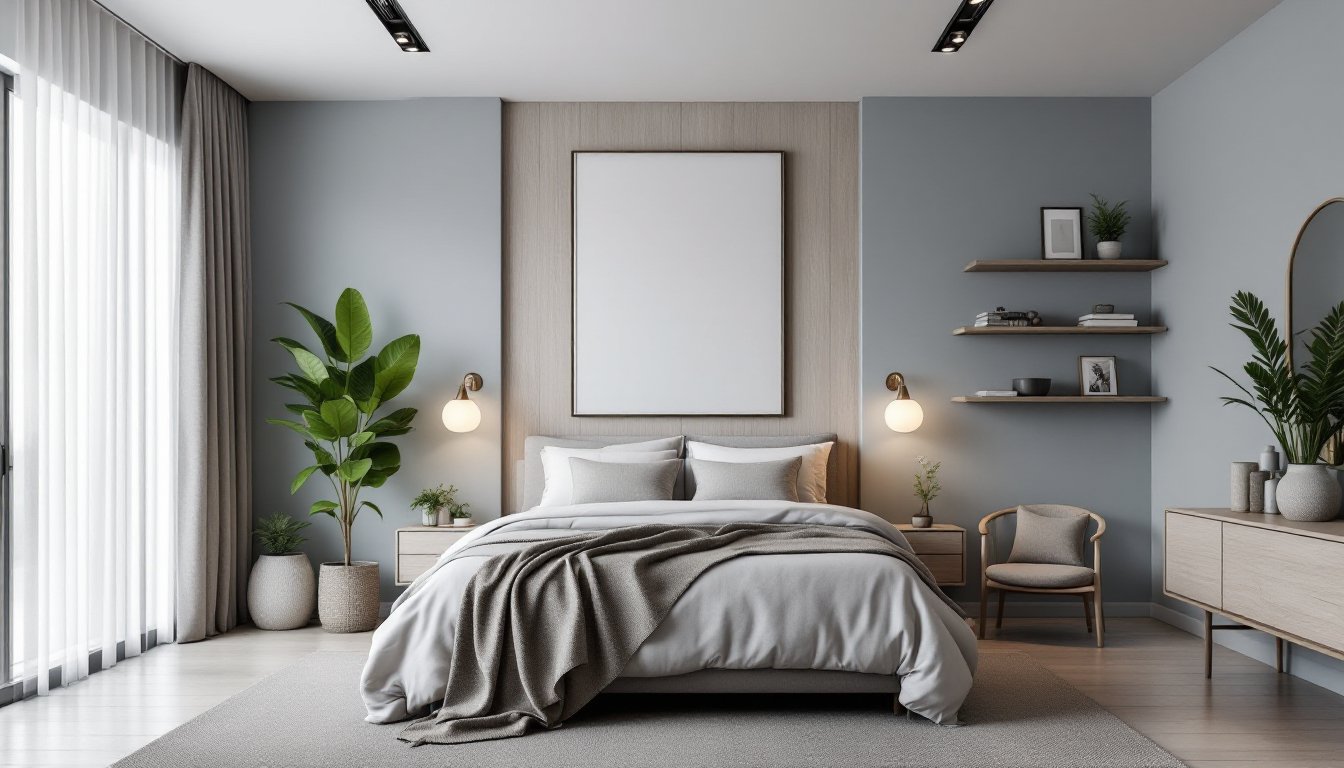
The colors you choose will affect not just how your bedroom looks, but how you feel in it. Cool tones like soft blues, muted greens, and pale grays naturally calm the nervous system, they’re linked to lower heart rates and better sleep. Warm neutrals like taupe, warm gray, and soft beige work equally well if you want a cozy atmosphere without the stimulation of bright oranges or reds.
A smart approach: pick one dominant wall color and keep the rest of your walls lighter or the same shade. This creates visual interest without overwhelming the space. Many find that soft, desaturated colors work better than bright or saturated ones, think “dusty blue” rather than “cobalt.” If you want something more distinctive, consider an accent wall with a subtle pattern or a warmer tone behind the headboard.
Don’t underestimate the impact of trim and ceiling color. Painting your ceiling a slightly warmer white or very pale gray can make the room feel more intimate without darkening it. A fresh coat of primer and quality paint in matte or eggshell finish (not glossy) will hide minor wall imperfections and create a more restful, light-absorbing surface. If your bedroom has an open connection to living room furnishing ideas, consider how your bedroom palette transitions, a cohesive flow between spaces makes the whole home feel larger.
Lighting Design for Ambiance and Functionality
Good bedroom lighting requires three layers: ambient (general overhead light), task (reading or getting dressed), and accent (mood lighting). Most bedrooms rely too heavily on overhead lights, which can feel harsh and sterile.
Start with a dimmer switch on your main ceiling fixture or add a ceiling-mounted fixture with warm bulbs (2700K color temperature, not the cold 4000K+). Dimmers cost $15–40 and take 30 minutes to install if you’re handy, they’re one of the highest-return bedroom upgrades you can make. For task lighting, bedside lamps on a nightstand beat wall sconces if you read in bed: if you don’t, a pair of soft wall-mounted lights flanking the bed works well and saves table space.
Accent lighting matters too. A simple string of warm LED fairy lights around a headboard or a small salt lamp on a shelf creates visual softness without being Pinterest-y. Avoid placing lights directly above your bed, this mimics an interrogation room. Instead, angle them slightly or position them to the sides. If your bedroom lacks natural light, mirrors positioned opposite windows bounce whatever sunlight exists throughout the day. Resources like Home Bunch showcase excellent examples of how professional designers layer bedroom lighting to feel both functional and relaxing.
Furniture Layouts That Maximize Space and Comfort
Layout is where many bedroom interior design efforts fall apart. A bed floating in the center of a room, dresser crammed against a window, and nightstands blocking walkways might technically fit, but they don’t feel good to live in.
Start by measuring your room and sketching it to scale on graph paper, even a rough sketch helps you see sightlines and traffic flow. Ideally, your bed should be the focal point: position it to be the first thing you see entering the room (often the wall opposite the door), and allow at least 18 inches of walking space on either side if possible. Your dresser or chest of drawers works best along a wall perpendicular to the bed, not competing for the same visual space.
If your bedroom is tight, resist the urge to crowd in too much furniture. A bed, one nightstand, and a narrow dresser or shelving unit are enough. A single accent chair in the corner beats an oversized sectional that eats half the room. For compact layouts, consider these ideas for lounge decor principles: vertical storage (tall shelves, wall-mounted cubbies) instead of floor-based pieces, and furniture with open legs (not skirted) so the eye sees underneath and the room feels more spacious.
Storage Solutions to Reduce Clutter
A cluttered bedroom sabotages relaxation instantly. The fix isn’t buying decorative boxes, it’s designing real, accessible storage that actually works for your stuff.
Under-bed storage works only if you commit to using it consistently: pull-out bins on wheels beat hard-to-reach, stuck-in-back-there boxes. Wall-mounted shelves or floating shelves above a dresser add storage without taking up floor space, budget $40–80 per shelf plus installation. If you’re handy, installing floating shelves with wall anchors (if drywall) or studs (better) takes an hour and changes the game.
Closet organization is often the biggest bang for the buck. Even $100 in hooks, a second hanging rod, and shelf dividers transforms a chaotic closet into functional storage. Keep seasonal items in bins labeled clearly and stored on a high shelf. The key to successful bedroom storage is honesty: if you don’t use it, it’s clutter. Nightstands with drawers beat open tops for hiding the stuff you need bedside but don’t want visible.
Textiles and Soft Furnishings for Coziness
Textiles do more heavy lifting in a bedroom than in any other room. Your bedding, curtains, and throw pillows set the tactile tone and directly affect comfort.
Start with quality sheets, high thread count (400–600 genuine Egyptian cotton) and a proper fitted sheet that won’t slip. Cheaply made bedding that bunches or pops off the mattress every night ruins the experience. Your comforter or duvet should match your climate: down or down-alternative for cold sleepers, cotton or linen for hot sleepers. A white or neutral duvet is easier to style and easier to launder than a printed one, and it provides a clean canvas for accent pillows.
Window coverings affect both light and sound. Blackout curtains ($30–80 per panel) genuinely help people sleep better, especially if you have early morning sun or street lights. Pair them with sheer curtains for daytime softness. Two throw pillows on your bed (not four or five) and a lightweight throw blanket draped over the foot of the bed add visual warmth without clutter. Look to resources like MyDomaine for inspiration on textiles that balance softness and style. For living area decor ideas, textiles bridge your bedroom and adjacent spaces beautifully.
Wall Treatments and Decor Accents
Bare walls make a bedroom feel unfinished. You don’t need a gallery wall or expensive wallpaper to fix it, small, intentional touches matter more.
A single large piece of artwork (or three smaller pieces arranged asymmetrically) above your bed costs $40–150 and transforms the space. Wood paneling or shiplap on one accent wall has become a classic for good reason: it’s textural, warm, and works with almost any color scheme. A full shiplap DIY project requires cutting boards (1×6 or 1×8 pine, roughly $1.50–3 per linear foot), a miter saw or circular saw, finishing nails or a brad nailer, and patience with measuring. Alternatively, peel-and-stick shiplap ($30–50) covers smaller accent walls without damage to rental walls, though real wood looks better long-term.
Wall-mounted floating shelves (plus to storage) can display a few meaningful items: a small plant, a framed photo, a decorative object. Keep it minimal, five or fewer items per shelf. Mirrors deserve their own mention: a large mirror opposite a window multiplies natural light, while a mirror with a wood or metal frame becomes decor itself. Homedit for modern takes on wall decor that avoid looking overdone.
Conclusion
Transforming your bedroom doesn’t require a designer or a massive budget. Start with color and lighting, these two elements alone shift how the space feels. Add a deliberate furniture layout, real storage, soft textiles, and intentional wall treatments, and you’ve built a bedroom that actually supports rest and recovery. Pick two or three ideas from this guide that speak to you, tackle those first, then build from there. The goal isn’t perfection: it’s creating a personal sanctuary that reflects how you want to live and sleep.